quantity theory of money
Quantity theory of money is a theory in monetary economics.
All 1 facts, and where they come from
Facts
1 facts · 0 confirmed by two sources · 0 cited · 1 from one source
Where this comes from
Papalocal keeps its own record. It started from these sources; what each one said is kept here as it was copied, so a change on their side never changes this page by itself. Tap one to read its version.
What Wikidata says · copied November 17, 2026 · revision 2542288014
- Described as
- theory in monetary economics
- What it is
- theory
- Wikipedias with a page
- 28
Wikidata item Q515911 (wikidata.org/wiki/Q515911), public domain (CC0). Copied 2026-11-17.
What Wikipedia says · copied November 17, 2026 · revision 1383272422
The quantity theory of money (QTM) is a hypothesis within monetary economics which states that the general price level of goods and services is directly proportional to the amount of money in circulation (i.e., the money supply), and that the causality runs from money to prices. This implies that the theory potentially explains inflation. It originated in the 16th century and has been proclaimed the oldest surviving theory in economics.
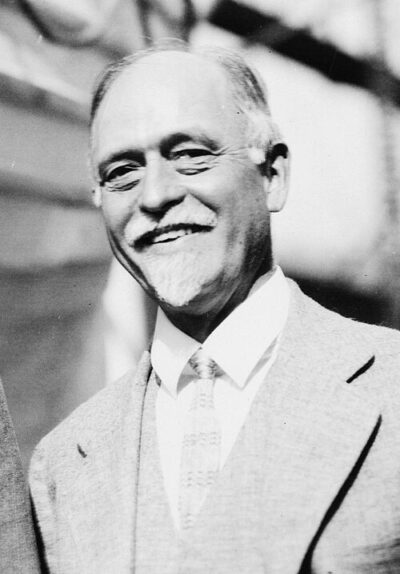
According to some, the theory was originally formulated by Renaissance mathematician Nicolaus Copernicus in 1517, whereas others mention Martín de Azpilcueta, a prominent member of the School of Salamanca, and Jean Bodin as independent originators of the theory. It has later been discussed and developed by several prominent thinkers and economists including John Locke, David Hume, Irving Fisher and Alfred Marshall. Milton Friedman made a restatement of the theory in 1956 and made it into a cornerstone of monetarist thinking.
The theory is often stated in terms of the equation MV = PY, where M is the money supply, V is the velocity of money, and PY is the nominal value of output or nominal GDP (P itself being a price index and Y the amount of real output). This equation is known as the quantity equation or the equation of exchange and is itself uncontroversial, as it can be seen as an accounting identity, residually defining velocity as the ratio of nominal output to the supply of money. Assuming additionally that Y is exogenous, being independently determined by other factors, that V is constant, and that M is exogenous and under the control of the central bank, the equation is turned into a theory which says that inflation (the change in P over time) can be controlled by setting the growth rate of M. However, all three assumptions are arguable and have been challenged over time. Output is generally believed to be affected by monetary policy at least temporarily, velocity has historically changed in unanticipated ways because of shifts in the money demand function, and some economists believe the money supply to be endogenously determined and hence not controlled by the monetary authorities. While it is called the Quantity Theory of Money, as James Tobin pointed out in his debate with Milton Friedman it should be called the Quantity Theory of Prices or Inflation, since it is a theory of the inflation rate, and not of the money growth rate.
The QTM played an important role in the monetary policy of the 1970s and 1980s when several leading central banks (including the Federal Reserve, the Bank of England and Bundesbank) based their policies on a money supply target in accordance with the theory. However, the results were not satisfactory, and strategies focusing specifically on monetary aggregates were generally abandoned during the 1980s and 1990s. Today, most major central banks in practice follow inflation targeting by suitably changing interest rates, and monetary aggregates play little role in monetary policy considerations in most countries.
From the Wikipedia article “Quantity theory of money” (en.wikipedia.org/wiki/Quantity_theory_of_money), by its contributors, under CC BY-SA 4.0 (creativecommons.org/licenses/by-sa/4.0/). Copied 2026-11-17; not changed.
Confirmed Two sources agree. Cited One source, and it names where it got it. One source One source, without a reference of its own. Sources disagree The sources disagree. We show the best-supported value and keep theirs below.