quaternion
Quaternion is a noncommutative extension of the real numbers. It came out in 1843.
- Came out
- 1843
All 3 facts, and where they come from
Facts
3 facts · 0 confirmed by two sources · 1 cited · 2 from one source
Where this comes from
Papalocal keeps its own record. It started from these sources; what each one said is kept here as it was copied, so a change on their side never changes this page by itself. Tap one to read its version.
What Wikidata says · copied November 17, 2026 · revision 2563474090
- Described as
- noncommutative extension of the real numbers
- Other names
- Hamilton number
- Comes after
- complex number
- Followed by
- octonion
- Came out
- 1843 · 1 reference
- Wikipedias with a page
- 75
Wikidata item Q173853 (wikidata.org/wiki/Q173853), public domain (CC0). Copied 2026-11-17.
What Wikipedia says · copied November 17, 2026 · revision 1385633072
In mathematics, the quaternions form a number system similar to the complex numbers, with the usual arithmetical operations of addition, subtraction, multiplication, and division, but with four real-number components instead of two. Unlike with the complex numbers, quaternion multiplication is not commutative, meaning that the result of multiplying two quaternions depends on their order. Quaternions can be used to represent vectors in three-dimensional space, which provides a definition of the quotient of two vectors.
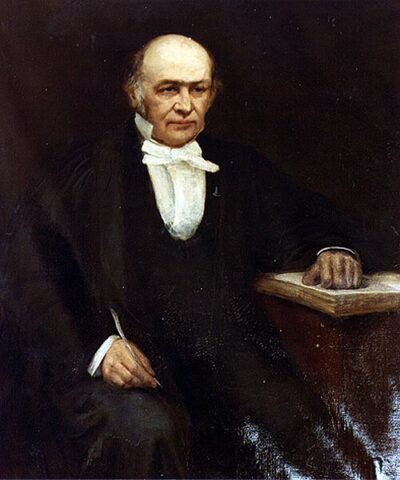
Quaternions were first described by the Irish mathematician and physicist William Rowan Hamilton in 1843, and in his honor the set of all quaternions is conventionally denoted by ℍ or H. A generic quaternion is usually represented in the form
a+b𝐢+c𝐣+d𝐤,
where the coefficients a, b, c, d are real numbers, and 1, i, j, k are the basis vectors or basis elements.
Quaternions are used in pure mathematics, but also have practical uses in applied mathematics, particularly for calculations involving three-dimensional rotations, such as in three-dimensional computer graphics, computer vision, robotics, magnetic resonance imaging and crystallographic texture analysis. They can be used alongside other methods of rotation, such as Euler angles and rotation matrices, or as an alternative to them, depending on the application.
As an abstract mathematical structure, quaternions form a four-dimensional associative normed division algebra over the real numbers, and therefore a ring, also a division ring and a domain. Because of their non-commutative multiplication, they do not form a field. The quaternions are also a special case of a Clifford algebra, classified as Cl0,2(ℝ)≅Cl3,0+(ℝ).
According to the Frobenius theorem, the algebra ℍ is one of only two finite-dimensional division rings containing a proper subring isomorphic to the real numbers; the other being the complex numbers. These rings are also Euclidean Hurwitz algebras, of which the quaternions are the largest associative algebra (and hence the largest ring). Further extending the quaternions yields the non-associative octonions, which is the last normed division algebra over the real numbers. The next extension gives the sedenions, which have zero divisors and so cannot be a normed division algebra.
The unit quaternions give a group structure on the 3-sphere S3 isomorphic to the groups Spin(3) and SU(2), i.e. the universal cover group of SO(3). The positive and negative basis vectors form the eight-element quaternion group.
From the Wikipedia article “Quaternion” (en.wikipedia.org/wiki/Quaternion), by its contributors, under CC BY-SA 4.0 (creativecommons.org/licenses/by-sa/4.0/). Copied 2026-11-17; not changed.
Confirmed Two sources agree. Cited One source, and it names where it got it. One source One source, without a reference of its own. Sources disagree The sources disagree. We show the best-supported value and keep theirs below.