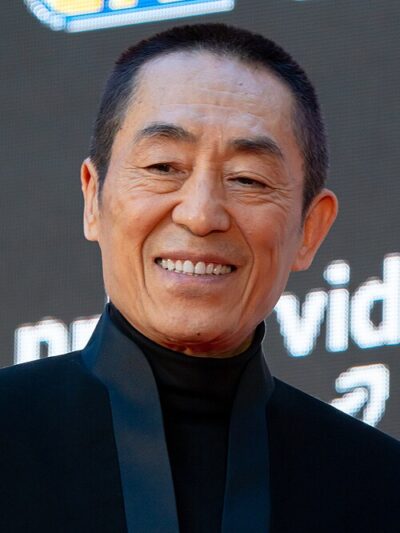
Raise the Red Lantern
Raise the Red Lantern is a 1991 film by Zhang Yimou. It stars Gong Li, He Saifei and Cao Cuifen. It won the Hundred Flowers Award for Best Picture and 1 more.
- Released
- September 10, 1991
- Directed by
- Zhang Yimou
- Genre
- romantic drama film
- Country of origin
- People's Republic of China
All 17 facts, and where they come from
Facts
17 facts · 0 confirmed by two sources · 4 cited · 13 from one source
Where this comes from
Papalocal keeps its own record. It started from these sources; what each one said is kept here as it was copied, so a change on their side never changes this page by itself. Tap one to read its version.
What Wikidata says · copied November 17, 2026 · revision 2568989064
- Described as
- 1991 film by Zhang Yimou
- What it is
- film
- Directed by
- Zhang Yimou · 1 reference
- Music by
- Zhao Jiping
- Screenplay by
- Ni Zhen
- Produced by
- Hou Hsiao-Hsien
- Starring
- Gong Li; He Saifei; Cao Cuifen · 1 reference; Kong Lin
- Genre
- romantic drama film · 1 reference; historical film · 1 reference
- Released
- September 10, 1991 · 1 reference; December 17, 1991 · 1 reference; December 20, 1991 · 1 reference
- Original language
- Mandarin
- Country of origin
- People's Republic of China · 1 reference
- Based on
- Raise the Red Lantern
- Awards
- Hundred Flowers Award for Best Picture; BAFTA Award for Best Film Not in the English Language
- Wikipedias with a page
- 28
Wikidata item Q665146 (wikidata.org/wiki/Q665146), public domain (CC0). Copied 2026-11-17.
What Wikipedia says · copied November 17, 2026 · revision 1385818995
Raise the Red Lantern is a 1991 period drama film directed by Zhang Yimou and starring Gong Li. It is an adaptation by Ni Zhen of the 1990 novella Raise the Red Lantern (originally Wives and Concubines) by Su Tong. A Chinese-Hong Kong co-production, the film was later adapted into a ballet of the same title by the National Ballet of China, also directed by Zhang. Set during the Warlord Era in the 1920s, the film tells the story of a young woman who becomes the fourth wife of a wealthy man. It was the fourth of nine collaborations between Zhang and Gong. The film was shot in the Qiao Family Compound near the ancient city of Pingyao, in Shanxi Province.
Raise the Red Lantern received widespread critical acclaim. It was entered into the 48th Venice International Film Festival, where it was nominated for the Golden Lion and won the Silver Lion. It was also nominated for the Academy Award for Best Foreign Language Film and won the BAFTA Award for Best Film Not in the English Language. It is considered an important work in the so-called Fifth Generation movement of Chinese cinema and is one of the most internationally highly-regarded films from mainland China overall; it appeared on The New York Times's list of the 1000 best films ever made in 2004 and on the BBC's list of the 100 greatest foreign language films in 2018.
From the Wikipedia article “Raise the Red Lantern” (en.wikipedia.org/wiki/Raise_the_Red_Lantern), by its contributors, under CC BY-SA 4.0 (creativecommons.org/licenses/by-sa/4.0/). Copied 2026-11-17; not changed.
Confirmed Two sources agree. Cited One source, and it names where it got it. One source One source, without a reference of its own. Sources disagree The sources disagree. We show the best-supported value and keep theirs below.