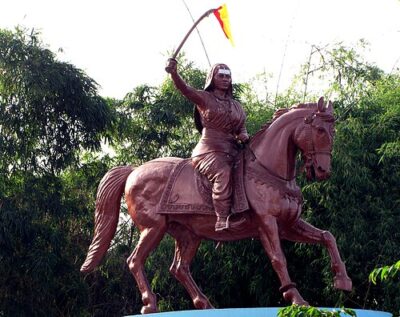
Raja
Raja is a monarch or princely ruler.
All 1 facts, and where they come from
Facts
1 facts · 0 confirmed by two sources · 0 cited · 1 from one source
Where this comes from
Papalocal keeps its own record. It started from these sources; what each one said is kept here as it was copied, so a change on their side never changes this page by itself. Tap one to read its version.
What Wikidata says · copied November 17, 2026 · revision 2541609974
- Described as
- monarch or princely ruler
- Other names
- Rajah
- What it is
- hereditary title
- Wikipedias with a page
- 49
Wikidata item Q684172 (wikidata.org/wiki/Q684172), public domain (CC0). Copied 2026-11-17.
What Wikipedia says · copied November 17, 2026 · revision 1385982023
Raja (; from IAST rājan-) is a noble or royal Sanskrit title historically used by some Indian rulers, monarchs, and highest-ranking nobles. The title was historically used in the Indian subcontinent and Southeast Asia.
The title has a long history in South Asia and Southeast Asia, being attested from the Rigveda, where a rājan- is a ruler, see for example the daśarājñá yuddhá, the "Battle of Ten Kings".
The title has equivalent cognates in other Indo-European languages, notably the Latin Rex and the Celtic Rix.
The Maratha title "Rao" (or "Rao") functions as both a given name and an honorific title. Derived from words like the Sanskrit "Rājā" meaning "king," it is associated with the Kshatriya varna and can be considered a Kshatriya title.
From the Wikipedia article “Raja” (en.wikipedia.org/wiki/Raja), by its contributors, under CC BY-SA 4.0 (creativecommons.org/licenses/by-sa/4.0/). Copied 2026-11-17; not changed.
Confirmed Two sources agree. Cited One source, and it names where it got it. One source One source, without a reference of its own. Sources disagree The sources disagree. We show the best-supported value and keep theirs below.