Rankine–Hugoniot conditions
Rankine–Hugoniot conditions is a concept in physics.
All 3 facts, and where they come from
Facts
3 facts · 0 confirmed by two sources · 0 cited · 3 from one source
Where this comes from
Papalocal keeps its own record. It started from these sources; what each one said is kept here as it was copied, so a change on their side never changes this page by itself. Tap one to read its version.
What Wikidata says · copied November 17, 2026 · revision 2474496468
- Described as
- concept in physics
- Other names
- Rankine-Hugoniot equation
- What it is
- physical theory
- Named after
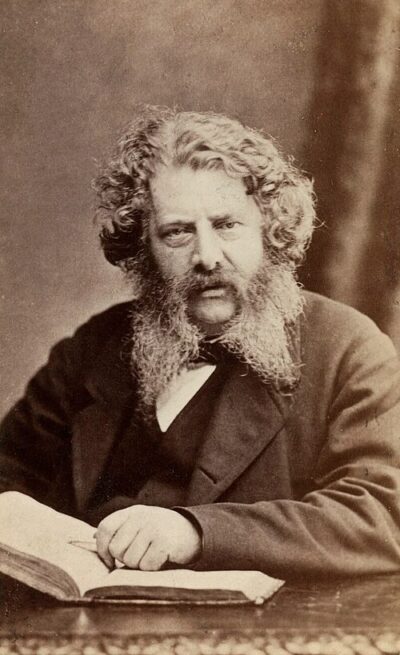
- William John Macquorn Rankine; Pierre Henri Hugoniot
- Wikipedias with a page
- 15
Wikidata item Q1192131 (wikidata.org/wiki/Q1192131), public domain (CC0). Copied 2026-11-17.
What Wikipedia says · copied November 17, 2026 · revision 1385381024
The Rankine–Hugoniot conditions, also referred to as Rankine–Hugoniot jump conditions or Rankine–Hugoniot relations, describe the relationship between the states on both sides of a shock wave or a combustion wave (deflagration or detonation) in a one-dimensional flow in fluids or a one-dimensional deformation in solids. They are named in recognition of the work carried out by Scottish engineer and physicist William John Macquorn Rankine and French engineer Pierre Henri Hugoniot.
The basic idea of the jump conditions is to consider what happens to a fluid when it undergoes a rapid change. Consider, for example, driving a piston into a tube filled with non-reacting gas. A disturbance is propagated through the fluid somewhat faster than the speed of sound. Because the disturbance propagates supersonically, it is a shock wave, and the fluid downstream of the shock has no advance information of it. In a frame of reference moving with the wave, atoms or molecules in front of the wave slam into the wave supersonically. On a microscopic level, they undergo collisions on the scale of the mean free path length until they come to rest in the post-shock flow (but moving in the frame of reference of the wave or of the tube). The bulk transfer of kinetic energy heats the post-shock flow. Because the mean free path length is assumed to be negligible in comparison to all other length scales in a hydrodynamic treatment, the shock front is essentially a hydrodynamic discontinuity. The jump conditions then establish the transition between the pre- and post-shock flow, based solely upon the conservation of mass, momentum, and energy. The conditions are correct even though the shock actually has a positive thickness. This non-reacting example of a shock wave also generalizes to reacting flows, where a combustion front (either a detonation or a deflagration) can be modeled as a discontinuity in a first approximation.
From the Wikipedia article “Rankine–Hugoniot conditions” (en.wikipedia.org/wiki/Rankine–Hugoniot_conditions), by its contributors, under CC BY-SA 4.0 (creativecommons.org/licenses/by-sa/4.0/). Copied 2026-11-17; not changed.
Confirmed Two sources agree. Cited One source, and it names where it got it. One source One source, without a reference of its own. Sources disagree The sources disagree. We show the best-supported value and keep theirs below.