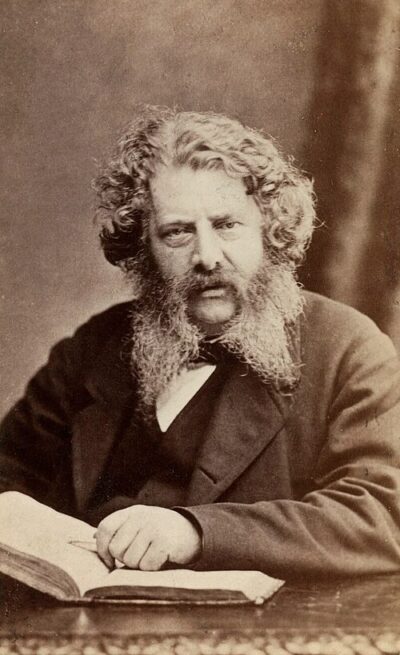
Rankine theory
Rankine theory is a theory of active and passive earth pressure.
All 2 facts, and where they come from
Facts
2 facts · 0 confirmed by two sources · 0 cited · 2 from one source
Where this comes from
Papalocal keeps its own record. It started from these sources; what each one said is kept here as it was copied, so a change on their side never changes this page by itself. Tap one to read its version.
What Wikidata says · copied November 17, 2026 · revision 2515951497
- Described as
- theory of active and passive earth pressure
- Other names
- maximum-normal stress theory, Rankine's theory
- What it is
- mathematical model; physical theory
- Wikipedias with a page
- 4
Wikidata item Q7293283 (wikidata.org/wiki/Q7293283), public domain (CC0). Copied 2026-11-17.
What Wikipedia says · copied November 17, 2026 · revision 1361307728
Rankine's theory, also known as maximum-normal stress theory, developed in 1857 by William John Macquorn Rankine, is a stress field solution that predicts active and passive earth pressure. It assumes that the soil is cohesionless, the wall is frictionless, the soil-wall interface is vertical, the failure surface on which the soil moves is planar, and the resultant force is angled parallel to the backfill surface. The equations for active and passive lateral earth pressure coefficients are given below. Note that φ' is the angle of shearing resistance of the soil and the backfill is inclined at angle β to the horizontal.
Ka=cosβ−(cos2β−cos2ϕ)1/2cosβ+(cos2β−cos2ϕ)1/2∗cosβ
Kp=cosβ+(cos2β−cos2ϕ)1/2cosβ−(cos2β−cos2ϕ)1/2∗cosβ
For the case where β is 0, the above equations simplify toKa=tan2(45−ϕ2)
Kp=tan2(45+ϕ2)
From the Wikipedia article “Rankine's theory” (en.wikipedia.org/wiki/Rankine's_theory), by its contributors, under CC BY-SA 4.0 (creativecommons.org/licenses/by-sa/4.0/). Copied 2026-11-17; not changed.
Confirmed Two sources agree. Cited One source, and it names where it got it. One source One source, without a reference of its own. Sources disagree The sources disagree. We show the best-supported value and keep theirs below.