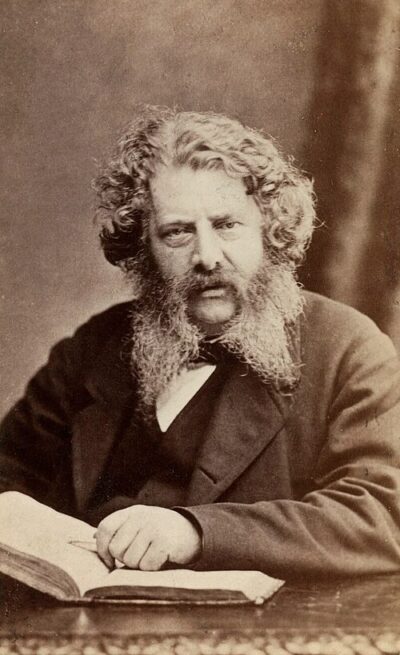
Rankine vortex
Rankine vortex is a mathematical formula for viscous fluid.
All 1 facts, and where they come from
Facts
1 facts · 0 confirmed by two sources · 0 cited · 1 from one source
Where this comes from
Papalocal keeps its own record. It started from these sources; what each one said is kept here as it was copied, so a change on their side never changes this page by itself. Tap one to read its version.
What Wikidata says · copied November 17, 2026 · revision 2401758037
- Described as
- mathematical formula for viscous fluid
- Other names
- Rankine's combined vortex
- What it is
- mathematical model
- Wikipedias with a page
- 7
Wikidata item Q7293284 (wikidata.org/wiki/Q7293284), public domain (CC0). Copied 2026-11-17.
What Wikipedia says · copied November 17, 2026 · revision 1355401046
The Rankine vortex is a simple mathematical model of a vortex in a viscous fluid. It is named after its discoverer, William John Macquorn Rankine.
The vortices observed in nature are usually modelled with an irrotational (potential or free) vortex. However, in a potential vortex, the velocity becomes infinite at the vortex center. In reality, very close to the origin, the motion resembles a solid body rotation. The Rankine vortex model assumes a solid-body rotation inside a cylinder of radius a and a potential vortex outside the cylinder. The radius a is referred to as the vortex-core radius. The velocity components (vr,vθ,vz) of the Rankine vortex, expressed in terms of the cylindrical-coordinate system (r,θ,z) are given byvr=0,vθ(r)=Γ2π{r/a2r≤a,1/rr>a,vz=0
where Γ is the circulation strength of the Rankine vortex. Since solid-body rotation is characterized by an azimuthal velocity Ωr, where Ω is the constant angular velocity, the parameter Ω=Γ/(2πa2) can also be used to characterize the vortex.
The vorticity field (ωr,ωθ,ωz) associated with the Rankine vortex isωr=0,ωθ=0,ωz={2Ωr≤a,0r>a.
At all points inside the core of the Rankine vortex, the vorticity is uniform at twice the angular velocity of the core; whereas vorticity is zero at all points outside the core because the flow there is irrotational.
In reality, vortex cores are not always circular; and vorticity is not exactly uniform throughout the vortex core.
From the Wikipedia article “Rankine vortex” (en.wikipedia.org/wiki/Rankine_vortex), by its contributors, under CC BY-SA 4.0 (creativecommons.org/licenses/by-sa/4.0/). Copied 2026-11-17; not changed.
Confirmed Two sources agree. Cited One source, and it names where it got it. One source One source, without a reference of its own. Sources disagree The sources disagree. We show the best-supported value and keep theirs below.
Picture: Wikimedia Commons: Rankine vortex animation.gif · See Commons file page