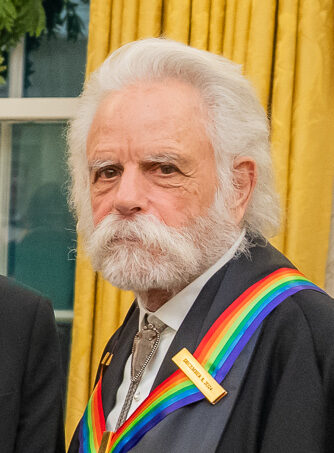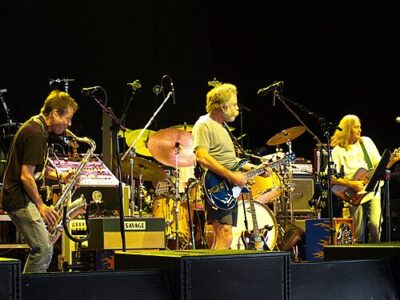
RatDog
RatDog is an American rock band.
- Genre
- rock music
- Country of origin
- United States
All 4 facts, and where they come from
Facts
4 facts · 0 confirmed by two sources · 0 cited · 4 from one source
Where this comes from
Papalocal keeps its own record. It started from these sources; what each one said is kept here as it was copied, so a change on their side never changes this page by itself. Tap one to read its version.
What Wikidata says · copied November 17, 2026 · revision 2520560005
- Described as
- American rock band
- Other names
- Bob Weir and RatDog, The Ratdog Revue, Ratdog
- What it is
- musical group
- Genre
- rock music
- Country of origin
- United States
- Official website
- http://ratdog.org/
- Wikipedias with a page
- 4
Wikidata item Q491448 (wikidata.org/wiki/Q491448), public domain (CC0). Copied 2026-11-17.
What Wikipedia says · copied November 17, 2026 · revision 1372869398
RatDog was an American rock band. The group began in 1995 as a side project for Grateful Dead guitarist and singer Bob Weir. After the Dead disbanded later that year, RatDog became Weir's primary band. They performed some Grateful Dead songs, a mixture of covers (including Bob Dylan and Chuck Berry tunes), and some originals. They released two albums – Evening Moods (2000) and Live at Roseland (2001). RatDog last toured in July 2014. Weir died in January 2026.
The lineup of RatDog evolved over time. Musicians who were members of the band at different times include Rob Wasserman and Robin Sylvester on bass, Jay Lane on drums, Matthew Kelly, Mark Karan, and Steve Kimock on guitar, and Vince Welnick, Johnny Johnson and Jeff Chimenti on keyboards.
From the Wikipedia article “RatDog” (en.wikipedia.org/wiki/RatDog), by its contributors, under CC BY-SA 4.0 (creativecommons.org/licenses/by-sa/4.0/). Copied 2026-11-17; not changed.
Confirmed Two sources agree. Cited One source, and it names where it got it. One source One source, without a reference of its own. Sources disagree The sources disagree. We show the best-supported value and keep theirs below.
Picture: John Gullo from NYC, USA, via Wikimedia Commons · CC BY 2.0