Rayleigh number
Rayleigh number is a characteristic number of heat transport in fluids.
All 1 facts, and where they come from
Facts
1 facts · 0 confirmed by two sources · 0 cited · 1 from one source
Where this comes from
Papalocal keeps its own record. It started from these sources; what each one said is kept here as it was copied, so a change on their side never changes this page by itself. Tap one to read its version.
What Wikidata says · copied November 17, 2026 · revision 2515887208
- Described as
- characteristic number of heat transport in fluids
- Named after
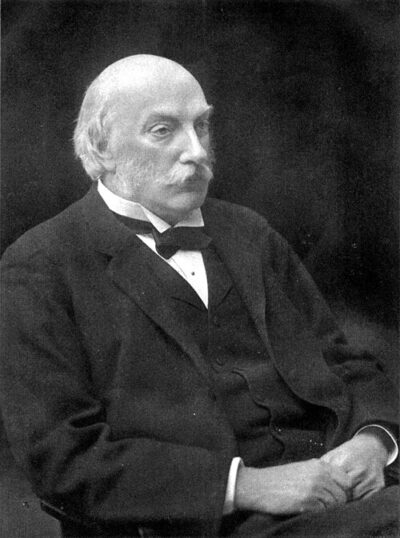
- John William Strutt
- Wikipedias with a page
- 23
Wikidata item Q898249 (wikidata.org/wiki/Q898249), public domain (CC0). Copied 2026-11-17.
What Wikipedia says · copied November 17, 2026 · revision 1381809347
In fluid mechanics, the Rayleigh number (Ra, after Lord Rayleigh) for a fluid is a dimensionless number associated with buoyancy-driven flow, also known as free (or natural) convection. It characterises the fluid's flow regime: a value in a certain lower range denotes laminar flow; a value in a higher range, turbulent flow. Below a certain critical value, there is no fluid motion and heat transfer is by conduction rather than convection. For most engineering purposes, the Rayleigh number is large, somewhere around 106 to 108.
The Rayleigh number is defined as the product of the Grashof number (Gr), which describes the relationship between buoyancy and viscosity within a fluid, and the Prandtl number (Pr), which describes the relationship between momentum diffusivity and thermal diffusivity: Ra = Gr × Pr. Hence it may also be viewed as the ratio of buoyancy and viscosity forces multiplied by the ratio of momentum and thermal diffusivities: Ra = B/μ × ν/α. It is closely related to the Nusselt number (Nu).
From the Wikipedia article “Rayleigh number” (en.wikipedia.org/wiki/Rayleigh_number), by its contributors, under CC BY-SA 4.0 (creativecommons.org/licenses/by-sa/4.0/). Copied 2026-11-17; not changed.
Confirmed Two sources agree. Cited One source, and it names where it got it. One source One source, without a reference of its own. Sources disagree The sources disagree. We show the best-supported value and keep theirs below.