Report on Manufactures
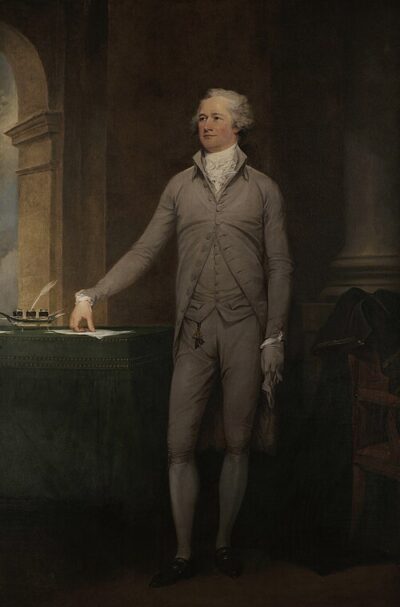
Report on Manufactures is a report. It was written by Alexander Hamilton.
- Written by
- Alexander Hamilton
All 2 facts, and where they come from
Facts
2 facts · 0 confirmed by two sources · 0 cited · 2 from one source
Where this comes from
Papalocal keeps its own record. It started from these sources; what each one said is kept here as it was copied, so a change on their side never changes this page by itself. Tap one to read its version.
What Wikidata says · copied November 16, 2026 · revision 2373782437
- What it is
- report
- Written by
- Alexander Hamilton
- Wikipedias with a page
- 7
Wikidata item Q1777472 (wikidata.org/wiki/Q1777472), public domain (CC0). Copied 2026-11-16.
What Wikipedia says · copied November 16, 2026 · revision 1371595846
In United States history, the Report on the Subject of Manufactures, generally referred to by its shortened title Report on Manufactures, is the third of four major reports, and magnum opus, of American Founding Father and first U.S. Treasury Secretary Alexander Hamilton. It was presented to the Congress on December 5, 1791. In the report, Hamilton argued for industrial policy to support modern manufacturing technologies in the United States.
It laid forth economic principles rooted in both the mercantilist system of Elizabeth I's England and the practices of Jean-Baptiste Colbert of France. The main ideas of the Report would later be incorporated into the "American System" program by US Senator Henry Clay of Kentucky and his Whig Party. Abraham Lincoln, who called himself a "Henry Clay tariff Whig" during his early years, would later make the principles cornerstones, together with his opposition to the institution and the expansion of slavery, of the fledgling Republican Party.
Hamilton's ideas would form the basis for the American School of economics.
From the Wikipedia article “Report on Manufactures” (en.wikipedia.org/wiki/Report_on_Manufactures), by its contributors, under CC BY-SA 4.0 (creativecommons.org/licenses/by-sa/4.0/). Copied 2026-11-16; not changed.
Confirmed Two sources agree. Cited One source, and it names where it got it. One source One source, without a reference of its own. Sources disagree The sources disagree. We show the best-supported value and keep theirs below.