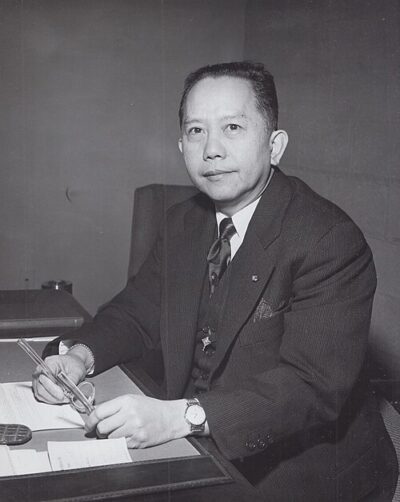
Resident Commissioner of the Philippines
Resident Commissioner of the Philippines is an elective office. It was created in 1907.
- Country
- Philippines
- Created
- November 22, 1907
All 5 facts, and where they come from
Facts
5 facts · 0 confirmed by two sources · 0 cited · 5 from one source
Where this comes from
Papalocal keeps its own record. It started from these sources; what each one said is kept here as it was copied, so a change on their side never changes this page by itself. Tap one to read its version.
What Wikidata says · copied November 17, 2026 · revision 2526717539
- Described as
- position
- What it is
- elective office
- Created
- November 22, 1907 · 1 reference
- Ended
- July 4, 1946
- Country
- Philippines; United States
- Wikipedias with a page
- 4
Wikidata item Q1143291 (wikidata.org/wiki/Q1143291), public domain (CC0). Copied 2026-11-17.
What Wikipedia says · copied November 17, 2026 · revision 1373765052
The resident commissioner of the Philippine Islands to the United States (Spanish: Comisario Residente de las Islas Filipinas a Estados Unidos) was a non-voting member of the United States House of Representatives sent by the Philippines from 1907 until its internationally recognized independence in 1946. It was similar to current non-voting members of Congress such as the resident commissioner of Puerto Rico and delegates from Washington, D.C., Guam, the Northern Mariana Islands and other territories of the United States.
Like current non-voting members, resident commissioners could speak and otherwise participate in the business of the House, but did not have full voting rights. Two resident commissioners were sent until 1937, when after the establishment of the Commonwealth of the Philippines, the number was changed to one.
From the Wikipedia article “Resident Commissioner of the Philippines” (en.wikipedia.org/wiki/Resident_Commissioner_of_the_Philippines), by its contributors, under CC BY-SA 4.0 (creativecommons.org/licenses/by-sa/4.0/). Copied 2026-11-17; not changed.
Confirmed Two sources agree. Cited One source, and it names where it got it. One source One source, without a reference of its own. Sources disagree The sources disagree. We show the best-supported value and keep theirs below.