Riemann hypothesis
Riemann hypothesis is a conjecture in mathematics linked to the repartition of prime numbers.
All 3 facts, and where they come from
Facts
3 facts · 0 confirmed by two sources · 0 cited · 3 from one source
Where this comes from
Papalocal keeps its own record. It started from these sources; what each one said is kept here as it was copied, so a change on their side never changes this page by itself. Tap one to read its version.
What Wikidata says · copied November 17, 2026 · revision 2567007895
- Described as
- conjecture in mathematics linked to the repartition of prime numbers
- Other names
- RH, Riemann Hypothesis
- What it is
- conjecture; mathematical problem
- Named after
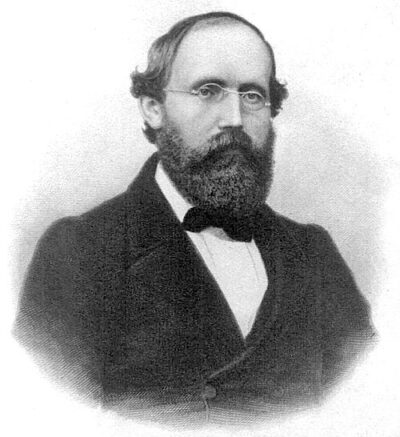
- Bernhard Riemann
- Wikipedias with a page
- 63
Wikidata item Q205966 (wikidata.org/wiki/Q205966), public domain (CC0). Copied 2026-11-17.
What Wikipedia says · copied November 17, 2026 · revision 1386024246
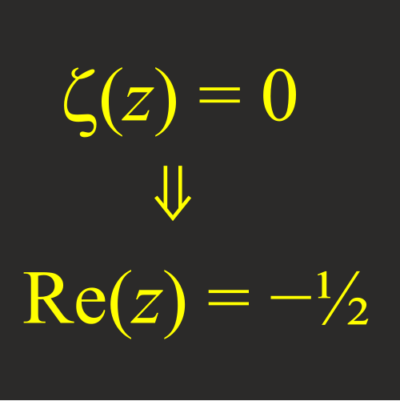
In mathematics, the Riemann hypothesis is the conjecture that the Riemann zeta function has its zeros only at the negative even integers and at complex numbers with real part 12. Many consider it to be the most important unsolved problem in pure mathematics. It is of great interest in number theory because it implies results about the distribution of prime numbers. It was proposed by Bernhard Riemann, after whom it is named. There is overwhelming numerical evidence for the correctness of the hypothesis, but no proof is known.
The Riemann hypothesis and some of its generalizations, along with Goldbach's conjecture and the twin prime conjecture, make up Hilbert's eighth problem in David Hilbert's list of twenty-three unsolved problems; it is also one of the Millennium Prize Problems of the Clay Mathematics Institute, which offers US$1 million for a solution to any of them. The name is also used for some closely related analogues, some of which have been proved, such as the Riemann hypothesis for curves over finite fields, which was proved by André Weil.
The Riemann zeta function ζ is a function whose argument may be any complex number other than 1, and whose values are also complex. It has zeros at the negative even integers; that is, ζ(s)=0 when s is one of −2,−4,−6,… These are called its trivial zeros. The zeta function is also zero for other values of s, which are called non-trivial zeros. The Riemann hypothesis is concerned with the locations of these non-trivial zeros, and states that:Thus, the hypothesis states that all the nontrivial zeros lie on the critical line, consisting of the complex numbers 12+it where t is a real number and i is the imaginary unit.
From the Wikipedia article “Riemann hypothesis” (en.wikipedia.org/wiki/Riemann_hypothesis), by its contributors, under CC BY-SA 4.0 (creativecommons.org/licenses/by-sa/4.0/). Copied 2026-11-17; not changed.
Confirmed Two sources agree. Cited One source, and it names where it got it. One source One source, without a reference of its own. Sources disagree The sources disagree. We show the best-supported value and keep theirs below.
Picture: AstroOgier, via Wikimedia Commons · CC BY-SA 4.0