Riemann integral
Riemann integral is a basic type of integral in elementary calculus.
All 2 facts, and where they come from
Facts
2 facts · 0 confirmed by two sources · 0 cited · 2 from one source
Where this comes from
Papalocal keeps its own record. It started from these sources; what each one said is kept here as it was copied, so a change on their side never changes this page by itself. Tap one to read its version.
What Wikidata says · copied November 17, 2026 · revision 2543741833
- Described as
- basic type of integral in elementary calculus
- What it is
- mathematical concept
- Named after
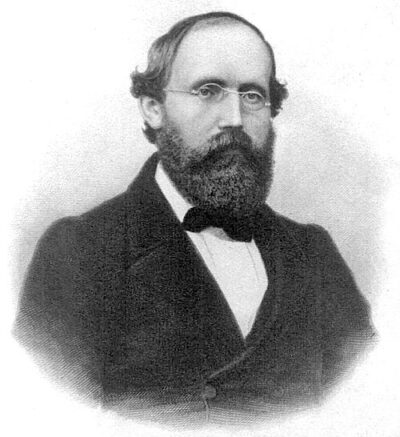
- Bernhard Riemann
- Wikipedias with a page
- 46
Wikidata item Q697181 (wikidata.org/wiki/Q697181), public domain (CC0). Copied 2026-11-17.
What Wikipedia says · copied November 17, 2026 · revision 1384626927
In real analysis, the Riemann integral is a rigorous definition of the integral of a function on an interval. It defines the integral by approximating the region under the graph of a function by finite sums of areas of vertical rectangles. For suitable functions, including every continuous function on a closed bounded interval, these Riemann sums approach a single limiting value as the partitions of the interval become finer. That limiting value defines the integral, and Riemann sums that are suitably close to the limit can be used as numerical approximations.
Bernhard Riemann introduced the integral in work presented to the faculty at the University of Göttingen in 1854 and published in 1868. It is the integral most commonly introduced in elementary calculus, although in advanced analysis it is often replaced by more general notions such as the Lebesgue integral.
From the Wikipedia article “Riemann integral” (en.wikipedia.org/wiki/Riemann_integral), by its contributors, under CC BY-SA 4.0 (creativecommons.org/licenses/by-sa/4.0/). Copied 2026-11-17; not changed.
Confirmed Two sources agree. Cited One source, and it names where it got it. One source One source, without a reference of its own. Sources disagree The sources disagree. We show the best-supported value and keep theirs below.