Routh–Hurwitz theorem
Routh–Hurwitz theorem is a mathematical theorem.
All 1 facts, and where they come from
Facts
1 facts · 0 confirmed by two sources · 0 cited · 1 from one source
Where this comes from
Papalocal keeps its own record. It started from these sources; what each one said is kept here as it was copied, so a change on their side never changes this page by itself. Tap one to read its version.
What Wikidata says · copied November 18, 2026 · revision 2420901206
- Described as
- mathematical theorem
- What it is
- theorem
- Wikipedias with a page
- 5
Wikidata item Q4455015 (wikidata.org/wiki/Q4455015), public domain (CC0). Copied 2026-11-18.
What Wikipedia says · copied November 18, 2026 · revision 1322004954
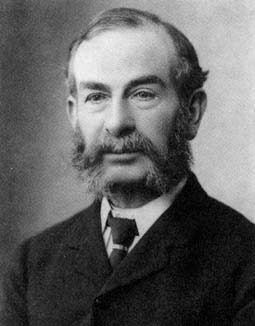
In mathematics, the Routh–Hurwitz theorem gives a test to determine whether all roots of a given polynomial lie in the left-half complex plane. Polynomials with this property are called Hurwitz stable polynomials. The Routh–Hurwitz theorem is important in dynamical systems and control theory, because the characteristic polynomial of the differential equations of a stable, linear system has roots limited to the left half plane (negative eigenvalues). Thus the theorem provides a mathematical test, the Routh–Hurwitz stability criterion, to determine whether a linear dynamical system is stable without solving the system. The Routh–Hurwitz theorem was proved in 1895, and it was named after Edward John Routh and Adolf Hurwitz.
From the Wikipedia article “Routh–Hurwitz theorem” (en.wikipedia.org/wiki/Routh–Hurwitz_theorem), by its contributors, under CC BY-SA 4.0 (creativecommons.org/licenses/by-sa/4.0/). Copied 2026-11-18; not changed.
Confirmed Two sources agree. Cited One source, and it names where it got it. One source One source, without a reference of its own. Sources disagree The sources disagree. We show the best-supported value and keep theirs below.