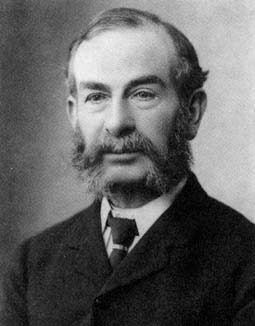
Routh's theorem
Routh's theorem is a geometrical theorem of triangles.
All 2 facts, and where they come from
Facts
2 facts · 0 confirmed by two sources · 0 cited · 2 from one source
Where this comes from
Papalocal keeps its own record. It started from these sources; what each one said is kept here as it was copied, so a change on their side never changes this page by itself. Tap one to read its version.
What Wikidata says · copied November 18, 2026 · revision 2457366995
- Described as
- geometrical theorem of triangles
- What it is
- theorem
- Named after
- Edward Routh
- Wikipedias with a page
- 16
Wikidata item Q1789863 (wikidata.org/wiki/Q1789863), public domain (CC0). Copied 2026-11-18.
What Wikipedia says · copied November 18, 2026 · revision 1380562872
In geometry, Routh's theorem determines the ratio of areas between a given triangle and a triangle formed by the pairwise intersections of three cevians. The theorem states that if in triangle ABC points D, E, and F lie on segments BC, CA, and AB, then writing CDBD=x, AECE=y, and BFAF=z, the signed area of the triangle formed by the cevians AD, BE, and CF is
SABC⋅(xyz−1)2(xy+y+1)(yz+z+1)(zx+x+1),
where SABC is the area of the triangle ABC.
This theorem was given by Edward John Routh on page 82 of his Treatise on Analytical Statics with Numerous Examples in 1896. The particular case x=y=z=2 has become popularized as the one-seventh area triangle. The x=y=z=1 case implies that the three medians are concurrent (through the centroid).
From the Wikipedia article “Routh's theorem” (en.wikipedia.org/wiki/Routh's_theorem), by its contributors, under CC BY-SA 4.0 (creativecommons.org/licenses/by-sa/4.0/). Copied 2026-11-18; not changed.
Confirmed Two sources agree. Cited One source, and it names where it got it. One source One source, without a reference of its own. Sources disagree The sources disagree. We show the best-supported value and keep theirs below.