Ruslan and Ludmila
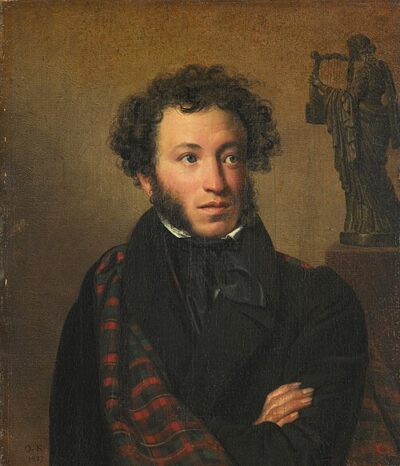
Ruslan and Ludmila is a 1820 poem by Alexander Pushkin.
- Released
- 1820
- Came out
- 1818
- Written by
- Alexander Pushkin
- Genre
- narrative poetry
- Country of origin
- Russian Empire
All 9 facts, and where they come from
Facts
9 facts · 0 confirmed by two sources · 0 cited · 9 from one source
Where this comes from
Papalocal keeps its own record. It started from these sources; what each one said is kept here as it was copied, so a change on their side never changes this page by itself. Tap one to read its version.
What Wikidata says · copied November 17, 2026 · revision 2555892770
- Described as
- 1820 poem by Alexander Pushkin
- What it is
- long poem; Russian fairy tales
- Written by
- Alexander Pushkin
- Genre
- narrative poetry; Russian fairy tales
- Released
- 1820
- Language
- Russian
- Country of origin
- Russian Empire
- Came out
- 1818
- Wikipedias with a page
- 39
Wikidata item Q2353039 (wikidata.org/wiki/Q2353039), public domain (CC0). Copied 2026-11-17.
What Wikipedia says · copied November 17, 2026 · revision 1362063862
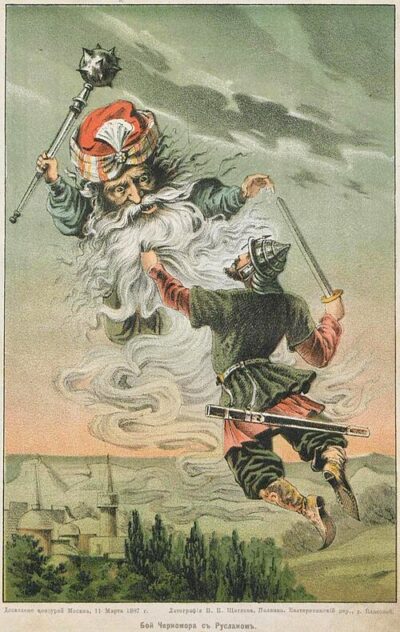
Ruslan and Ludmila (pre-reform Russian: Русла́нъ и Людми́ла; post-reform Russian: Русла́н и Людми́ла, romanized: Ruslán i Lyudmíla) is a poem by Alexander Pushkin, published in 1820. Written as an epic literary fairy tale consisting of a dedication (посвящение), six "cantos" (песни), and an epilogue (эпилог), it tells the story of the abduction of Ludmila, the daughter of Prince Vladimir of the Kievan Rus' (reigned 980–1015), by an evil wizard and the attempt by the brave knight Ruslan to find and rescue her.
From the Wikipedia article “Ruslan and Ludmila” (en.wikipedia.org/wiki/Ruslan_and_Ludmila), by its contributors, under CC BY-SA 4.0 (creativecommons.org/licenses/by-sa/4.0/). Copied 2026-11-17; not changed.
Confirmed Two sources agree. Cited One source, and it names where it got it. One source One source, without a reference of its own. Sources disagree The sources disagree. We show the best-supported value and keep theirs below.
Picture: Литография П. П. Щеглова, via Wikimedia Commons · Public domain