Safarnama
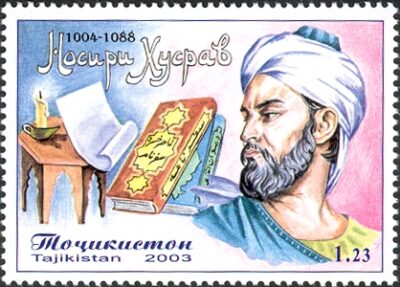
Safarnama is a literary work. It was written by Nasir Khusraw.
- Written by
- Nasir Khusraw
All 3 facts, and where they come from
Facts
3 facts · 0 confirmed by two sources · 0 cited · 3 from one source
Where this comes from
Papalocal keeps its own record. It started from these sources; what each one said is kept here as it was copied, so a change on their side never changes this page by itself. Tap one to read its version.
What Wikidata says · copied November 17, 2026 · revision 2550199094
- Described as
- literary work
- Other names
- Safarnamah, Safar nāmah
- What it is
- literary work
- Written by
- Nasir Khusraw
- Language
- Persian
- Wikipedias with a page
- 15
Wikidata item Q748253 (wikidata.org/wiki/Q748253), public domain (CC0). Copied 2026-11-17.
What Wikipedia says · copied November 17, 2026 · revision 1332968251
Safarnāma (Persian: سفرنامه) is a book of travel literature written during the 11th century by Nasir Khusraw (1003–1077). It is also known as the Book of Travels.
It is an account of Khusraw's seven-year journey through the Islamic world. He initially set out on a Hajj, the obligatory Pilgrimage to Mecca. Departing on 5 March 1046, Khusraw took a less than direct route, heading north toward the Caspian Sea. Throughout his travels he kept a minutely detailed journal which clearly describes many facets of life in the Islamic world of the 11th Century.
Nasir Khusraw compiled the Safarnama in a later period of his life, using notes that he had taken along his seven-year journey. His prose is straightforward, resembling a travelogue as opposed to his more poetic and philosophical Diwan. Khusraw begins his Safarnama with a description of himself, his life, and his monumental decision to travel to Mecca. He recounts an extraordinary dream in which he converses with a man who encourages him to seek out that which is beneficial to the intellect. Before the dream ends, the man allegedly points towards the qibla and says nothing more.
In the remaining sections of the Safarnama, Khusraw describes cities and towns along the path of his journey, with particular focus on Mecca, Jerusalem, and Cairo (the capital of the Fatimid Caliphate at the time). Khusraw's work is appreciated for its detailed descriptions of these cities, with precise accounts of civic buildings and markets.
From the Wikipedia article “Safarnama” (en.wikipedia.org/wiki/Safarnama), by its contributors, under CC BY-SA 4.0 (creativecommons.org/licenses/by-sa/4.0/). Copied 2026-11-17; not changed.
Confirmed Two sources agree. Cited One source, and it names where it got it. One source One source, without a reference of its own. Sources disagree The sources disagree. We show the best-supported value and keep theirs below.