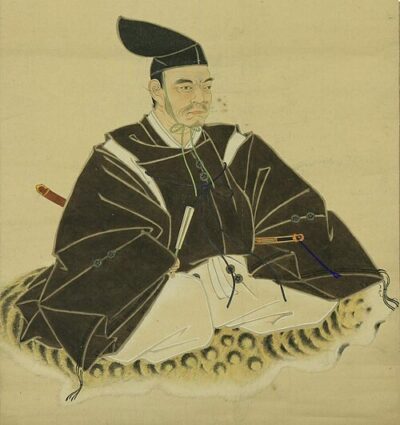
Sairan Igen
Sairan Igen is a five-volume geography byArai Hakuseki. It came out in 1713.
- Came out
- 1713
- Written by
- Arai Hakuseki
All 4 facts, and where they come from
Facts
4 facts · 0 confirmed by two sources · 0 cited · 4 from one source
Where this comes from
Papalocal keeps its own record. It started from these sources; what each one said is kept here as it was copied, so a change on their side never changes this page by itself. Tap one to read its version.
What Wikidata says · copied November 17, 2026 · revision 2517535994
- Described as
- five-volume geography byArai Hakuseki
- What it is
- written work
- Written by
- Arai Hakuseki
- Language
- Classical Chinese
- Came out
- 1713
- Wikipedias with a page
- 9
Wikidata item Q259708 (wikidata.org/wiki/Q259708), public domain (CC0). Copied 2026-11-17.
What Wikipedia says · copied November 17, 2026 · revision 1295761077
The Sairan Igen (采覧異言) is a five-volume geography established in 1713 then revised in 1725 by the Japanese Confucian philosopher, government official, and poet Arai Hakuseki. It was an early and influential work of world geography in Japan, widely circulated there by manuscripts. Based on knowledge that Hakuseki gained through conversations with missionary Giovanni Battista Sidotti and referencing such works as Matteo Ricci's Kunyu Wanguo Quantu (lit. 'A Map of the Myriad Countries of the World'), the books describe the geography, history, customs, and biological organisms of the world as known during Hakuseki's day.
From the Wikipedia article “Sairan Igen” (en.wikipedia.org/wiki/Sairan_Igen), by its contributors, under CC BY-SA 4.0 (creativecommons.org/licenses/by-sa/4.0/). Copied 2026-11-17; not changed.
Confirmed Two sources agree. Cited One source, and it names where it got it. One source One source, without a reference of its own. Sources disagree The sources disagree. We show the best-supported value and keep theirs below.