Samuel von Brukenthal National College
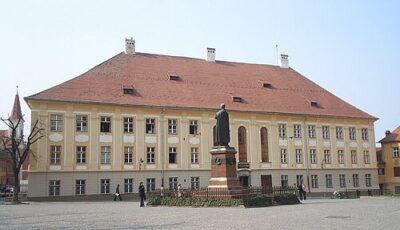
Samuel von Brukenthal National College is a heritage site in Sibiu County, Romania. It was founded in 1380. 861 students study there.
All 6 facts, and where they come from
Facts
6 facts · 0 confirmed by two sources · 1 cited · 5 from one source
Where this comes from
Papalocal keeps its own record. It started from these sources; what each one said is kept here as it was copied, so a change on their side never changes this page by itself. Tap one to read its version.
What Wikidata says · copied November 17, 2026 · revision 2549961910
- Described as
- heritage site in Sibiu County, Romania
- What it is
- school
- Founded
- 1380
- Located in
- Sibiu
- Country
- Romania · 1 reference
- Students
- 861
- Official website
- http://brukenthal.ro/
- Wikipedias with a page
- 10
Wikidata item Q18539118 (wikidata.org/wiki/Q18539118), public domain (CC0). Copied 2026-11-17.
What Wikipedia says · copied November 17, 2026 · revision 1339882985
Samuel von Brukenthal National College (German: Samuel-von-Brukenthal-Gymnasium, Romanian: Colegiul Național "Samuel von Brukenthal", Hungarian: Samuel von Brukenthal Főgimnázium) is a German-language high school founded in Nagyszeben, Transylvania, Kingdom of Hungary, today in Sibiu (German: Hermannstadt), Sibiu County, Romania, located at 5 Albert Huet Square.
The school is named after baron Samuel von Brukenthal, governor of the Grand Principality of Transylvania between 6 July 1774 and 9 January 1787. The earliest record of the school is from 1380, making it the oldest German-language school on the territory of present-day Romania. The current school building was built between 1779 and 1786 on the site of an earlier school, and is classified as a historical monument with LMI code SB-II-m-A-12082.
From the Wikipedia article “Samuel von Brukenthal National College” (en.wikipedia.org/wiki/Samuel_von_Brukenthal_National_College), by its contributors, under CC BY-SA 4.0 (creativecommons.org/licenses/by-sa/4.0/). Copied 2026-11-17; not changed.
Confirmed Two sources agree. Cited One source, and it names where it got it. One source One source, without a reference of its own. Sources disagree The sources disagree. We show the best-supported value and keep theirs below.
Picture: Karin1992, via Wikimedia Commons · Public domain