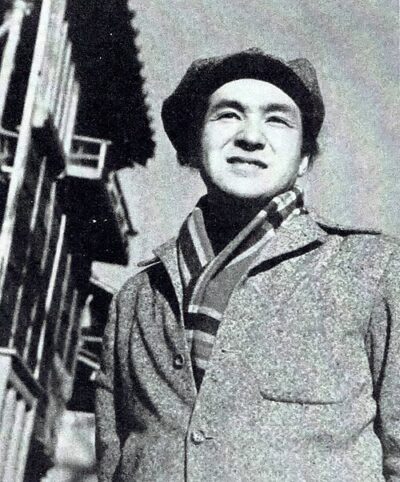
Samurai Rebellion
Samurai Rebellion is a 1967 film by Masaki Kobayashi. It stars Toshirō Mifune, Tatsuya Nakadai and Jun Hamamura.
- Released
- 1967
- Directed by
- Masaki Kobayashi
- Genre
- drama film
- Country of origin
- Japan
All 19 facts, and where they come from
Facts
19 facts · 0 confirmed by two sources · 1 cited · 18 from one source
Where this comes from
Papalocal keeps its own record. It started from these sources; what each one said is kept here as it was copied, so a change on their side never changes this page by itself. Tap one to read its version.
What Wikidata says · copied November 17, 2026 · revision 2570409888
- Described as
- 1967 film by Masaki Kobayashi
- Other names
- Rebellion
- What it is
- film
- Directed by
- Masaki Kobayashi · 1 reference
- Music by
- Tōru Takemitsu
- Screenplay by
- Shinobu Hashimoto
- Produced by
- Toshirō Mifune; Tomoyuki Tanaka
- Starring
- Toshirō Mifune; Tatsuya Nakadai; Jun Hamamura; Shigeru Kōyama; Yōko Tsukasa; Isao Yamagata; Gō Katō; Etsuko Ichihara; Masao Mishima
- Genre
- drama film
- Released
- 1967; May 27, 1967 · 1 reference; December 1967 · 1 reference
- Original language
- Japanese
- Country of origin
- Japan
- Wikipedias with a page
- 14
Wikidata item Q2437042 (wikidata.org/wiki/Q2437042), public domain (CC0). Copied 2026-11-17.
What Wikipedia says · copied November 17, 2026 · revision 1357111143
Samurai Rebellion (Japanese: 上意討ち 拝領妻始末, Hepburn: Jōi-uchi: Hairyō zuma shimatsu) is a 1967 Japanese jidaigeki film directed by Masaki Kobayashi. The film is based on a short story of the same name by Yasuhiko Takiguchi. Its screenplay was written by Shinobu Hashimoto.
Film historian Donald Richie suggests an approximate translation for its original Japanese title: Rebellion: Receive the Wife.
From the Wikipedia article “Samurai Rebellion” (en.wikipedia.org/wiki/Samurai_Rebellion), by its contributors, under CC BY-SA 4.0 (creativecommons.org/licenses/by-sa/4.0/). Copied 2026-11-17; not changed.
Confirmed Two sources agree. Cited One source, and it names where it got it. One source One source, without a reference of its own. Sources disagree The sources disagree. We show the best-supported value and keep theirs below.