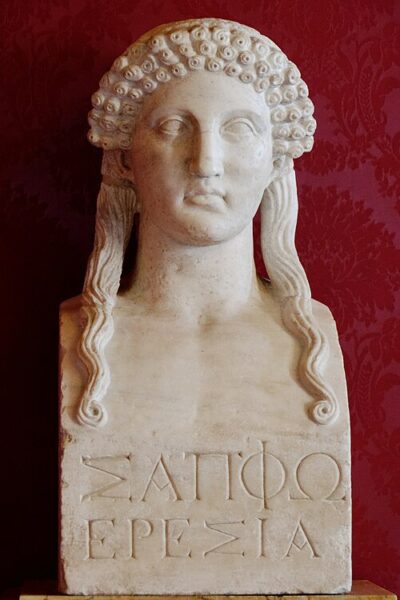
Sappho fr. 31 Voigt
Sappho fr. 31 Voigt is a poem written by Sappho.
- Written by
- Sappho
- Genre
- monodic lyric
All 4 facts, and where they come from
Facts
4 facts · 0 confirmed by two sources · 0 cited · 4 from one source
Where this comes from
Papalocal keeps its own record. It started from these sources; what each one said is kept here as it was copied, so a change on their side never changes this page by itself. Tap one to read its version.
What Wikidata says · copied November 17, 2026 · revision 2439650724
- Described as
- poem written by Sappho
- Other names
- Sappho 31, Sappho 2 (Bergk), Sappho 2 (Diehl), Sappho's Fragment 31
- What it is
- literary work
- Written by
- Sappho
- Genre
- monodic lyric
- Language
- Aeolic Greek
- Wikipedias with a page
- 5
Wikidata item Q17079267 (wikidata.org/wiki/Q17079267), public domain (CC0). Copied 2026-11-17.
What Wikipedia says · copied November 17, 2026 · revision 1375954224
Sappho 31 is a lyric poem by the Archaic Greek poet Sappho of the island of Lesbos. The poem is also known as phainetai moi (φαίνεταί μοι lit. 'It seems to me') after the opening words of its first line, and as the Ode to Anactoria, based on a conjecture that its subject is Anactoria, a woman mentioned elsewhere by Sappho. It is one of Sappho's most famous poems, describing her love for a young woman.
Fragment 31 has been the subject of numerous translations and adaptations from ancient times to the present day. Celebrated for its portrayal of intense emotion, the poem has influenced modern conceptions of lyric poetry, and its depiction of desire continues to influence writers today.
The poem has been called the most famous example of lovesickness.
From the Wikipedia article “Sappho 31” (en.wikipedia.org/wiki/Sappho_31), by its contributors, under CC BY-SA 4.0 (creativecommons.org/licenses/by-sa/4.0/). Copied 2026-11-17; not changed.
Confirmed Two sources agree. Cited One source, and it names where it got it. One source One source, without a reference of its own. Sources disagree The sources disagree. We show the best-supported value and keep theirs below.
Picture: Wikimedia Commons: Herkulaneischer Meister 002b.jpg · See Commons file page