satyagraha
Satyagraha is a form of nonviolent resistance practised during British colonial rule in India.
All 1 facts, and where they come from
Facts
1 facts · 0 confirmed by two sources · 0 cited · 1 from one source
Where this comes from
Papalocal keeps its own record. It started from these sources; what each one said is kept here as it was copied, so a change on their side never changes this page by itself. Tap one to read its version.
What Wikidata says · copied November 17, 2026 · revision 2564400074
- Described as
- form of nonviolent resistance practised during British colonial rule in India
- Other names
- satyagrahi
- Country
- British India
- Wikipedias with a page
- 60
Wikidata item Q194279 (wikidata.org/wiki/Q194279), public domain (CC0). Copied 2026-11-17.
What Wikipedia says · copied November 17, 2026 · revision 1382896636
Satyāgraha, or "truth force", is a particular form of nonviolent resistance or civil resistance. Someone who practises satyagraha is a satyagrahi.
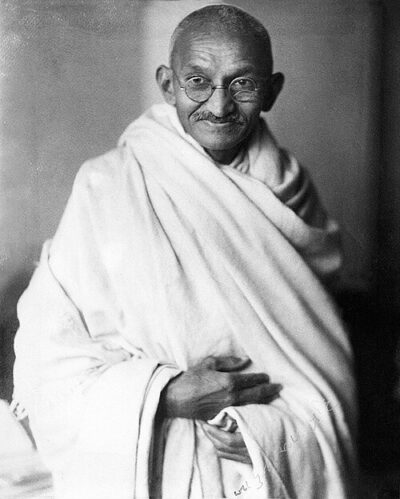
The term satyagraha was coined and developed by Mahatma Gandhi (1869–1948) as early as 1919.
Gandhi practised satyagraha as part of the Indian independence movement and also during his earlier struggles in South Africa for Indian rights. Satyagraha theory influenced Martin Luther King Jr.'s and James Bevel's campaigns during the Civil Rights Movement in the United States, as well as Nelson Mandela's struggle against apartheid in South Africa and many other social-justice and similar movements.
From the Wikipedia article “Satyagraha” (en.wikipedia.org/wiki/Satyagraha), by its contributors, under CC BY-SA 4.0 (creativecommons.org/licenses/by-sa/4.0/). Copied 2026-11-17; not changed.
Confirmed Two sources agree. Cited One source, and it names where it got it. One source One source, without a reference of its own. Sources disagree The sources disagree. We show the best-supported value and keep theirs below.