Schoenflies notation
Schoenflies notation is a notation to represent symmetry in point groups.
All 2 facts, and where they come from
Facts
2 facts · 0 confirmed by two sources · 0 cited · 2 from one source
Where this comes from
Papalocal keeps its own record. It started from these sources; what each one said is kept here as it was copied, so a change on their side never changes this page by itself. Tap one to read its version.
What Wikidata says · copied November 18, 2026 · revision 2530198830
- Described as
- notation to represent symmetry in point groups
- What it is
- scientific nomenclature; scientific theory
- Wikipedias with a page
- 10
Wikidata item Q903255 (wikidata.org/wiki/Q903255), public domain (CC0). Copied 2026-11-18.
What Wikipedia says · copied November 18, 2026 · revision 1350684308
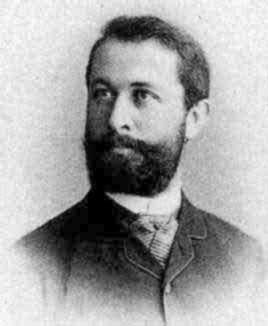
The Schoenflies (or Schönflies) notation, named after the German mathematician Arthur Moritz Schoenflies, is a notation primarily used to specify point groups in three dimensions. Because a point group alone is completely adequate to describe the symmetry of a molecule, the notation is often sufficient and commonly used for spectroscopy. However, in crystallography, there is additional translational symmetry, and point groups are not enough to describe the full symmetry of crystals, so the full space group is usually used instead. The naming of full space groups usually follows another common convention, the Hermann–Mauguin notation, also known as the international notation.
Although Schoenflies notation without superscripts is a pure point group notation, optionally, superscripts can be added to further specify individual space groups. However, for space groups, the connection to the underlying symmetry elements is much more clear in Hermann–Mauguin notation, so the latter notation is usually preferred for space groups.
From the Wikipedia article “Schoenflies notation” (en.wikipedia.org/wiki/Schoenflies_notation), by its contributors, under CC BY-SA 4.0 (creativecommons.org/licenses/by-sa/4.0/). Copied 2026-11-18; not changed.
Confirmed Two sources agree. Cited One source, and it names where it got it. One source One source, without a reference of its own. Sources disagree The sources disagree. We show the best-supported value and keep theirs below.