Schröder–Hipparchus number
Schröder–Hipparchus number is a number in combinatorics.
All 1 facts, and where they come from
Facts
1 facts · 0 confirmed by two sources · 0 cited · 1 from one source
Where this comes from
Papalocal keeps its own record. It started from these sources; what each one said is kept here as it was copied, so a change on their side never changes this page by itself. Tap one to read its version.
What Wikidata says · copied November 17, 2026 · revision 2454324614
- Described as
- number in combinatorics
- What it is
- mathematical concept
- Wikipedias with a page
- 6
Wikidata item Q15264444 (wikidata.org/wiki/Q15264444), public domain (CC0). Copied 2026-11-17.
What Wikipedia says · copied November 17, 2026 · revision 1380968706
In combinatorics, the Schröder–Hipparchus numbers form an integer sequence that can be used to count the plane trees with a given set of leaves, the ways of inserting parentheses into a sequence, and the ways of dissecting a convex polygon into smaller polygons by inserting diagonals. These numbers begin
1, 1, 3, 11, 45, 197, 903, 4279, 20793, 103049, ... (sequence A001003 in the OEIS).
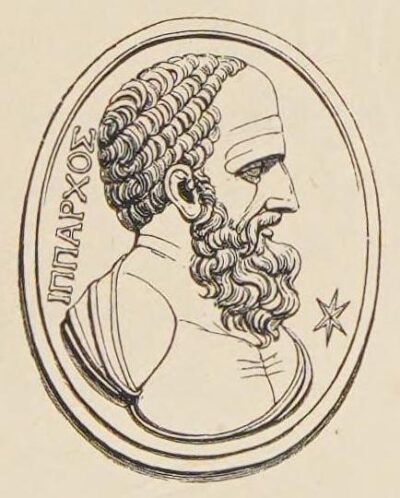
They are also called the super-Catalan numbers, the little Schröder numbers, or the Hipparchus numbers, after Eugène Charles Catalan and his Catalan numbers, Ernst Schröder and the closely related Schröder numbers, and the ancient Greek mathematician Hipparchus who appears from evidence in Plutarch to have known of these numbers.
From the Wikipedia article “Schröder–Hipparchus number” (en.wikipedia.org/wiki/Schröder–Hipparchus_number), by its contributors, under CC BY-SA 4.0 (creativecommons.org/licenses/by-sa/4.0/). Copied 2026-11-17; not changed.
Confirmed Two sources agree. Cited One source, and it names where it got it. One source One source, without a reference of its own. Sources disagree The sources disagree. We show the best-supported value and keep theirs below.