Scivias
Scivias is a work by Hildegard of Bingen. It came out in 1152.
- Published
- 1152
- Written by
- Hildegard of Bingen
All 4 facts, and where they come from
Facts
4 facts · 0 confirmed by two sources · 0 cited · 4 from one source
Where this comes from
Papalocal keeps its own record. It started from these sources; what each one said is kept here as it was copied, so a change on their side never changes this page by itself. Tap one to read its version.
What Wikidata says · copied November 17, 2026 · revision 2485031503
- Described as
- work by Hildegard of Bingen
- What it is
- literary work
- Written by
- Hildegard of Bingen
- Published
- 1152
- Language
- medieval Latin
- Wikipedias with a page
- 10
Wikidata item Q3045605 (wikidata.org/wiki/Q3045605), public domain (CC0). Copied 2026-11-17.
What Wikipedia says · copied November 17, 2026 · revision 1336167738
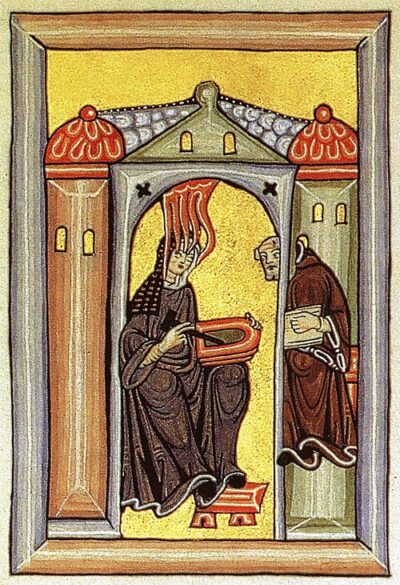
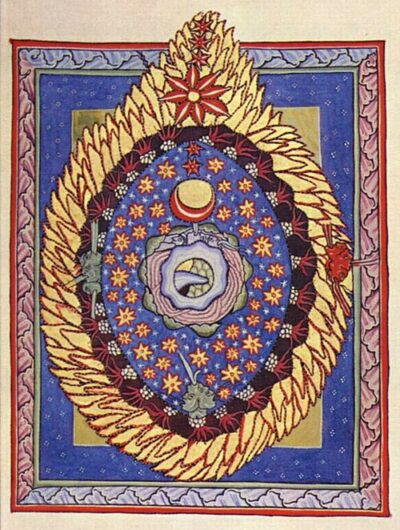
Scivias is an illustrated work by Hildegard von Bingen, completed in 1151 or 1152, describing 26 religious visions she experienced. It is the first of three works that she wrote describing her visions, the others being Liber vitae meritorum and De operatione Dei (also known as Liber divinorum operum). The title comes from the Latin phrase Sci vias Domini ('Know the Ways of the Lord'). The book is illustrated by 35 miniature illustrations, more than that are included in her two later books of visions.
The work is divided into three parts, reflecting the Trinity. The first and second parts are approximately equal in length, while the third is as long as the other two together. The first part includes a preface describing how she was commanded to write the work, and includes six visions dealing with themes of creation and the Fall. The second part consists of seven visions and deals with salvation through Jesus Christ, the Church, and the sacraments. The third part, with thirteen visions, is about the coming kingdom of God, through sanctification, and increased tension between good and evil. The final vision includes 14 songs, plus a portion of the music drama which was later published as the Ordo Virtutum. In each vision, she first described what she saw, and then recorded explanations she heard, which she believed to be the "voice of heaven."
From the Wikipedia article “Scivias” (en.wikipedia.org/wiki/Scivias), by its contributors, under CC BY-SA 4.0 (creativecommons.org/licenses/by-sa/4.0/). Copied 2026-11-17; not changed.
Confirmed Two sources agree. Cited One source, and it names where it got it. One source One source, without a reference of its own. Sources disagree The sources disagree. We show the best-supported value and keep theirs below.
Picture: Meister des Hildegardis-Codex, via Wikimedia Commons · Public domain