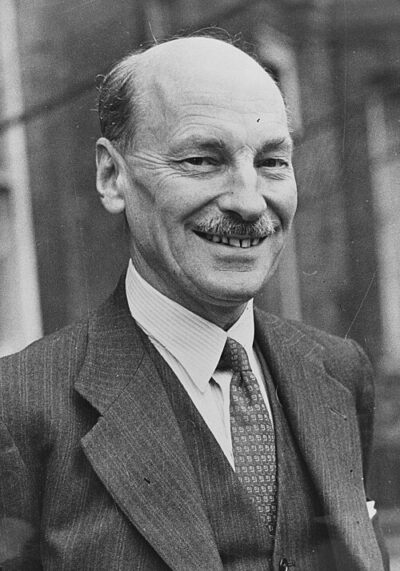
Secretary of State for Dominion Affairs
Secretary of State for Dominion Affairs is a United Kingdom government cabinet minister; 1925–1947.
- Office of
- United Kingdom
- Country
- United Kingdom
- Created
- June 11, 1925
All 5 facts, and where they come from
Facts
5 facts · 0 confirmed by two sources · 0 cited · 5 from one source
Where this comes from
Papalocal keeps its own record. It started from these sources; what each one said is kept here as it was copied, so a change on their side never changes this page by itself. Tap one to read its version.
What Wikidata says · copied November 17, 2026 · revision 2570615162
- Described as
- United Kingdom government cabinet minister; 1925–1947
- What it is
- position
- Created
- June 11, 1925 · 1 reference
- Ended
- July 7, 1947
- Country
- United Kingdom
- Office of
- United Kingdom
- Wikipedias with a page
- 6
Wikidata item Q7444340 (wikidata.org/wiki/Q7444340), public domain (CC0). Copied 2026-11-17.
What Wikipedia says · copied November 17, 2026 · revision 1373765886
The position of secretary of state for dominion affairs was a secretary of state in the Government of the United Kingdom, responsible for British relations with the Empire’s dominions – Canada, Australia, New Zealand, South Africa, Newfoundland, and the Irish Free State – and the self-governing Crown colony of Southern Rhodesia.
When initially created in 1925, the office was held in tandem with that of secretary of state for the colonies; this arrangement persisted until June 1930. On two subsequent occasions the offices were briefly held by the same person.
The secretary of state was supported by an under-secretary of state for dominion affairs. In 1947, the name of the office was changed to the secretary of state for commonwealth relations.
From the Wikipedia article “Secretary of State for Dominion Affairs” (en.wikipedia.org/wiki/Secretary_of_State_for_Dominion_Affairs), by its contributors, under CC BY-SA 4.0 (creativecommons.org/licenses/by-sa/4.0/). Copied 2026-11-17; not changed.
Confirmed Two sources agree. Cited One source, and it names where it got it. One source One source, without a reference of its own. Sources disagree The sources disagree. We show the best-supported value and keep theirs below.