shallow water equations
Shallow water equations is a set of partial differential equations that describe the flow below a pressure surface in a fluid.
All 1 facts, and where they come from
Facts
1 facts · 0 confirmed by two sources · 0 cited · 1 from one source
Where this comes from
Papalocal keeps its own record. It started from these sources; what each one said is kept here as it was copied, so a change on their side never changes this page by itself. Tap one to read its version.
What Wikidata says · copied November 18, 2026 · revision 2453412706
- Described as
- set of partial differential equations that describe the flow below a pressure surface in a fluid
- Other names
- SWE, Saint-Venant equations, de Saint-Venant equations
- What it is
- physical theory
- Wikipedias with a page
- 9
Wikidata item Q4008384 (wikidata.org/wiki/Q4008384), public domain (CC0). Copied 2026-11-18.
What Wikipedia says · copied November 18, 2026 · revision 1379959431
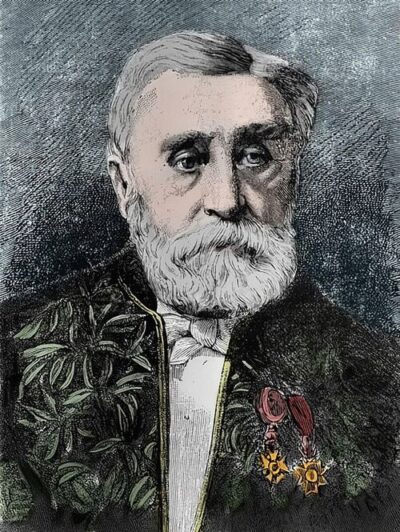
The shallow-water equations (SWE) are a set of hyperbolic partial differential equations (or parabolic if viscous shear is considered) that describe the flow below a pressure surface in a fluid (sometimes, but not necessarily, a free surface). The shallow-water equations in unidirectional form are also called (de) Saint-Venant equations, after Adhémar Jean Claude Barré de Saint-Venant (see the related section below).
The equations are derived from depth-integrating the Navier–Stokes equations, in the case where the horizontal length scale is much greater than the vertical length scale. Under this condition, conservation of mass implies that the vertical velocity scale of the fluid is small compared to the horizontal velocity scale. It can be shown from the momentum equation that vertical pressure gradients are nearly hydrostatic, and that horizontal pressure gradients are due to the displacement of the pressure surface, implying that the horizontal velocity field is constant throughout the depth of the fluid. Vertically integrating allows the vertical velocity to be removed from the equations. The shallow-water equations are thus derived.
While a vertical velocity term is not present in the shallow-water equations, note that this velocity is not necessarily zero. This is an important distinction because, for example, the vertical velocity cannot be zero when the floor changes depth, and thus if it were zero only flat floors would be usable with the shallow-water equations. Once a solution (i.e. the horizontal velocities and free surface displacement) has been found, the vertical velocity can be recovered via the continuity equation.
Situations in fluid dynamics where the horizontal length scale is much greater than the vertical length scale are common, so the shallow-water equations are widely applicable. They are used with Coriolis forces in atmospheric and oceanic modeling, as a simplification of the primitive equations of atmospheric flow.
Shallow-water equation models have only one vertical level, so they cannot directly encompass any factor that varies with height. However, in cases where the mean state is sufficiently simple, the vertical variations can be separated from the horizontal and several sets of shallow-water equations can describe the state.
From the Wikipedia article “Shallow water equations” (en.wikipedia.org/wiki/Shallow_water_equations), by its contributors, under CC BY-SA 4.0 (creativecommons.org/licenses/by-sa/4.0/). Copied 2026-11-18; not changed.
Confirmed Two sources agree. Cited One source, and it names where it got it. One source One source, without a reference of its own. Sources disagree The sources disagree. We show the best-supported value and keep theirs below.