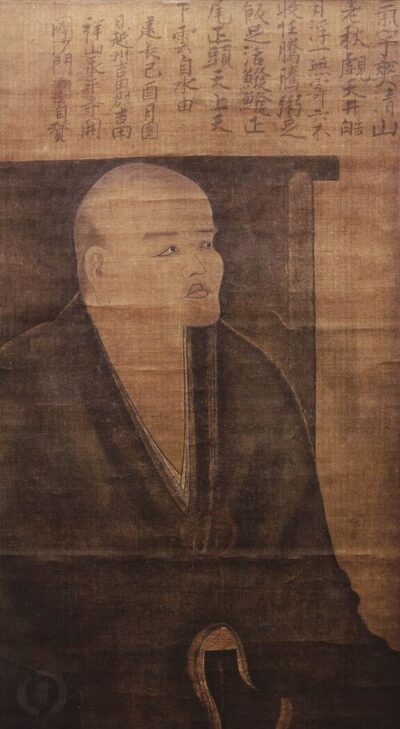
Shōbōgenzō Zuimonki
Shōbōgenzō Zuimonki is a collection of informal Dharma talks. It was written by Koun Ejō.
- Came out
- 1230s
- Written by
- Koun Ejō
All 4 facts, and where they come from
Facts
4 facts · 0 confirmed by two sources · 0 cited · 4 from one source
Where this comes from
Papalocal keeps its own record. It started from these sources; what each one said is kept here as it was copied, so a change on their side never changes this page by itself. Tap one to read its version.
What Wikidata says · copied November 17, 2026 · revision 2504454302
- Described as
- collection of informal Dharma talks
- What it is
- literary work
- Written by
- Koun Ejō
- Based on
- Shōbōgenzō
- Came out
- 1230s
- Wikipedias with a page
- 5
Wikidata item Q22908724 (wikidata.org/wiki/Q22908724), public domain (CC0). Copied 2026-11-17.
What Wikipedia says · copied November 17, 2026 · revision 1341636494
Shōbōgenzō Zuimonki (Japanese: 正法眼蔵隨聞記), sometimes known by its English translation The Treasury of the True Dharma Eye: Record of Things Heard, is a collection of informal Dharma talks given by the 13th century Sōtō Zen monk Eihei Dōgen and recorded by his primary disciple Koun Ejō from 1236 to 1239. The text was likely further edited by other disciples after Ejō's death.
The work is generally considered to be the easiest to understand of Dōgen's due to its concrete examples and the infrequent use of allusion, metaphor, and word play characteristic of his other writings. According to Shōhaku Okumura, a modern Zen priest, the fundamental message in Dōgen's talks is the importance of seeing impermanence. Dōgen also stresses the importance of monastic practice with a group of practitioners, practicing for the sake of the Buddhadharma alone, gainless zazen, intentional poverty, and taking steps to benefit others.
Several different versions of the Shōbōgenzō Zuimonki exist. The most widely read was first published in 1770 by Menzan Zuihō, a highly influential Zen scholar monk. This text is known as the rufu-bon, which means "popular version". A second, older version is called the Chōenji-bon, or "Chōen-ji version" after the temple in Aichi Prefecture where it was discovered in 1942 by Dōshū Ōkubo. This version was not available to the public until it was published by Chikuma Shobō with a modern Japanese translation in 1963.
From the Wikipedia article “Shōbōgenzō Zuimonki” (en.wikipedia.org/wiki/Shōbōgenzō_Zuimonki), by its contributors, under CC BY-SA 4.0 (creativecommons.org/licenses/by-sa/4.0/). Copied 2026-11-17; not changed.
Confirmed Two sources agree. Cited One source, and it names where it got it. One source One source, without a reference of its own. Sources disagree The sources disagree. We show the best-supported value and keep theirs below.