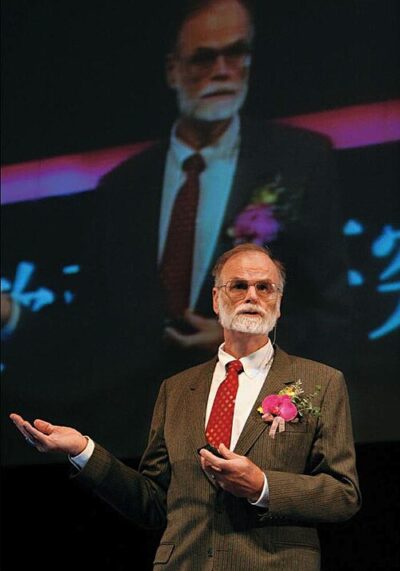
SIGMOD Edgar F. Codd Innovations Award
SIGMOD Edgar F. Codd Innovations Award is a lifetime research achievement award. It was created in 1992.
- Given by
- SIGMOD
- Field
- database design
- Created
- 1992
All 5 facts, and where they come from
Facts
5 facts · 0 confirmed by two sources · 0 cited · 5 from one source
Where this comes from
Papalocal keeps its own record. It started from these sources; what each one said is kept here as it was copied, so a change on their side never changes this page by itself. Tap one to read its version.
What Wikidata says · copied November 17, 2026 · revision 2329894906
- Described as
- lifetime research achievement award
- Other names
- Edgar F. Codd Innovations Award
- What it is
- science award
- Created
- 1992
- Given by
- SIGMOD
- Field
- database design
- Named after
- Edgar F. Codd
- Wikipedias with a page
- 4
Wikidata item Q10354964 (wikidata.org/wiki/Q10354964), public domain (CC0). Copied 2026-11-17.
What Wikipedia says · copied November 17, 2026 · revision 1385866378
The ACM SIGMOD Edgar F. Codd Innovations Award is a lifetime research achievement award given by the ACM Special Interest Group on Management of Data, at its yearly flagship conference (also called SIGMOD). According to its homepage, it is given "for innovative and highly significant contributions of enduring value to the development, understanding, or use of database systems and databases". The award has been given since 1992.
Until 2003, this award was known as the “SIGMOD Innovations Award.” In 2004, SIGMOD, with the unanimous approval of ACM Council, decided to rename the award to honor Dr. E.F. (Ted) Codd (1923 – 2003) who invented the relational data model and was responsible for the significant development of the database field as a scientific discipline.
From the Wikipedia article “SIGMOD Edgar F. Codd Innovations Award” (en.wikipedia.org/wiki/SIGMOD_Edgar_F._Codd_Innovations_Award), by its contributors, under CC BY-SA 4.0 (creativecommons.org/licenses/by-sa/4.0/). Copied 2026-11-17; not changed.
Confirmed Two sources agree. Cited One source, and it names where it got it. One source One source, without a reference of its own. Sources disagree The sources disagree. We show the best-supported value and keep theirs below.