
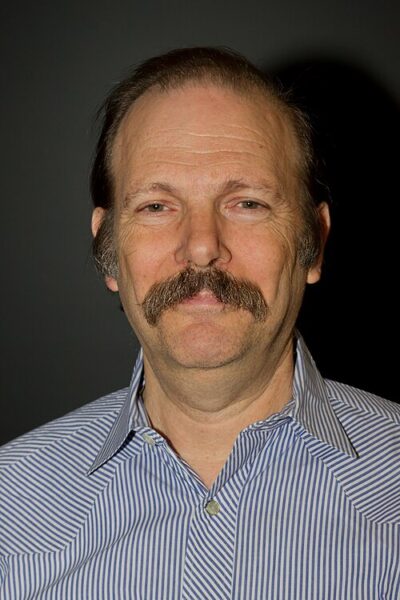
Moshe Vardi is an American computer scientist. Born July 4, 1954, in Haifa. Educated at Hebrew University of Jerusalem and Bar-Ilan University. Awards include Guggenheim Fellowship, Gödel Prize and Paris Kanellakis Award.
Facts
40 facts · 0 confirmed by two sources · 25 cited · 15 from one source
Where this comes from
Papalocal keeps its own record. It started from these sources; what each one said is kept here as it was copied, so a change on their side never changes this page by itself. Tap one to read its version.
What Wikidata says · copied November 19, 2026 · revision 2556884988
- Described as
- American computer scientist
- Other names
- Moshe Ya'akov Vardi, Moshe Y. Vardi, Moshe Y Vardi
- Born
- July 4, 1954
- Born in
- Haifa · 1 reference
- Citizen of
- United States
- Occupation
- computer scientist · 2 references; engineer; university teacher; mathematician · 1 reference; logician · 1 reference
- Worked for
- IBM; Rice University (1993–) · 1 reference; Stanford University (1981–1983)
- Education
- Hebrew University of Jerusalem (–1981); Bar-Ilan University (–1974); Weizmann Institute of Science (–1980)
- Member of
- Academia Europaea (2007–) · 1 reference; National Academy of Sciences (2015–) · 1 reference; American Academy of Arts and Sciences; American Association for the Advancement of Science (2002–); National Academy of Engineering; Association for the Advancement of Artificial Intelligence; Association for Computing Machinery (2000–) · 1 reference; Society for Industrial and Applied Mathematics (2015–) · 1 reference; American Mathematical Society (2018–) · 2 references; European Academy of Sciences (2003–) · 1 reference
- Awards
- Guggenheim Fellowship (2005) · 1 reference; Gödel Prize (2000) · 1 reference; Paris Kanellakis Award (2005) · 1 reference; EATCS award (2012) · 1 reference; Harry H. Goode Memorial Award (2011) · 1 reference; SIGMOD Edgar F. Codd Innovations Award (2008) · 1 reference; AAAI Fellow (2004) · 1 reference; ACM Fellow (2000) · 1 reference; Fellow of the American Mathematical Society (2019) · 2 references; Fellow of the American Association for the Advancement of Science (2002) · 1 reference; honorary doctor of the Saarland University (2002) · 1 reference; Fellow of the Society for Industrial and Applied Mathematics (2015) · 1 reference; Honorary doctor of the University of Liège (2017) · 1 reference; ACM-AAAI Allen Newell Award (2020) · 1 reference; honorary doctorate from University of Orléans (2002) · 1 reference
- Website
- https://www.cs.rice.edu/~vardi/
- Wikipedias with a page
- 11
Wikidata item Q1585964 (wikidata.org/wiki/Q1585964), public domain (CC0). Copied November 19, 2026.
What Wikipedia says · copied November 19, 2026 · revision 1376847603
Moshe Ya'akov Vardi (Hebrew: משה יעקב ורדי) is an Israeli theoretical computer scientist. He is the Karen Ostrum George Distinguished Service Professor in Computational Engineering at Rice University, United States. and a faculty advisor for the Ken Kennedy Institute. His interests focus on applications of logic to computer science, including database theory, finite model theory, knowledge of multi-agent systems, computer-aided verification and reasoning, and teaching logic across the curriculum. He is an expert in model checking, constraint satisfaction and database theory, common knowledge (logic), and theoretical computer science.
Vardi has authored or co-authored over 700 technical papers as well as editing several collections. He has authored the books Reasoning About Knowledge with Ronald Fagin, Joseph Halpern, and Yoram Moses, and Finite Model Theory and Its Applications with Erich Grädel, Phokion G. Kolaitis, Leonid Libkin, Maarten Marx, Joel Spencer, Yde Venema, and Scott Weinstein. He is senior editor of Communications of the ACM, after serving as its editor-in-chief for a decade.
From the Wikipedia article “Moshe Vardi” (en.wikipedia.org/wiki/Moshe_Vardi), by its contributors, under CC BY-SA 4.0 (creativecommons.org/licenses/by-sa/4.0/). Copied November 19, 2026; not changed.
Confirmed Two sources agree. Cited One source, and it names where it got it. One source One source, without a reference of its own. Sources disagree The sources disagree. We show the best-supported value and keep theirs below.
