
Sinn Féin
Sinn Féin is a left-wing nationalist political party in Ireland. It was founded in 1905 by Arthur Griffith. Its headquarters are in Parnell Square. It stands for Irish republicanism, republicanism and left-wing nationalism.
- Country
- Ireland
- Founded
- November 28, 1905
- Ideology
- Irish republicanism
- Chair
- Mary Lou McDonald (2018–)
All 14 facts, and where they come from
Facts
14 facts · 0 confirmed by two sources · 2 cited · 12 from one source
Where this comes from
Papalocal keeps its own record. It started from these sources; what each one said is kept here as it was copied, so a change on their side never changes this page by itself. Tap one to read its version.
What Wikidata says · copied November 16, 2026 · revision 2565926724
- Described as
- left-wing nationalist political party in Ireland
- Other names
- Sinn Fein, Sinn Féin party
- What it is
- political party
- Followed by
- Aontú
- Founded
- November 28, 1905 · 1 reference
- Founded by
- Arthur Griffith
- Headquarters
- Parnell Square
- Country
- Ireland; United Kingdom
- Chair
- Ruairí Ó Brádaigh (1970–1983) · 1 reference; Gerry Adams (1983–2018) · 1 reference
- Ideology
- Irish republicanism; republicanism; left-wing nationalism; populist socialism
- Official website
- https://www.sinnfein.ie/
- Wikipedias with a page
- 74
Wikidata item Q76382 (wikidata.org/wiki/Q76382), public domain (CC0). Copied 2026-11-16.
What Wikipedia says · copied November 16, 2026 · revision 1385487845
Sinn Féin ( shin FAYN; Irish: [ˌʃɪn̠ʲ ˈfʲeːnʲ] ; lit. '[We] Ourselves') is an Irish republican and democratic socialist political party active in Ireland, including both the Republic of Ireland and Northern Ireland.
The original Sinn Féin organisation was founded in 1905 by Arthur Griffith. Its members founded the revolutionary Irish Republic and its parliament, the First Dáil, and many of them were active in the Irish War of Independence, during which the party was associated with the Irish Republican Army (1919–1922). The party split before the Irish Civil War and again in its aftermath, giving rise to the two traditionally dominant parties of Irish politics: Fianna Fáil, and Cumann na nGaedheal (which merged with smaller groups to form Fine Gael). For several decades the remaining Sinn Féin organisation was small and often without parliamentary representation. It continued its association with the Irish Republican Army. Another split in 1970 at the start of the Troubles led to the modern Sinn Féin party, with the other faction eventually becoming the Workers' Party.
During the Troubles, Sinn Féin was associated with the Provisional Irish Republican Army. For most of that conflict, it was affected by broadcasting bans in the Irish and British media. Although the party sat on local councils, it maintained a policy of abstentionism for the British House of Commons and the Irish Dáil Éireann, standing for election to those legislatures but pledging not to take their seats if elected. After Gerry Adams became party leader in 1983, electoral politics were prioritised increasingly. In 1986, the party dropped its abstentionist policy for the Dáil; some members formed Republican Sinn Féin in protest. In the 1990s, Sinn Féin—under the leadership of Adams and Martin McGuinness—was involved in the Northern Ireland peace process. This led to the Good Friday Agreement and created the Northern Ireland Assembly, and saw Sinn Féin become part of the power-sharing Northern Ireland Executive. In 2006, it co-signed the St Andrews Agreement and agreed to support the Police Service of Northern Ireland.
Sinn Féin is the largest party in the Northern Ireland Assembly, having won the largest share of first-preference votes and the most seats in the 2022 election, the first time an Irish nationalist party has done so. Since 2024, Michelle O'Neill has served as the first ever Irish nationalist First Minister of Northern Ireland. From 2007 to 2022, Sinn Féin was the second-largest party in the Assembly, after the Democratic Unionist Party (DUP), and its nominees served as Deputy First Minister in the Northern Ireland Executive.
In the House of Commons of the United Kingdom, Sinn Féin has held seven of Northern Ireland's seats since the 2024 election; it continues its policy of abstentionism at Westminster. In Dáil Éireann it is the main opposition, having won the second largest number of seats in the 2024 election. The current president of Sinn Féin is Mary Lou McDonald, who succeeded Gerry Adams in 2018.
From the Wikipedia article “Sinn Féin” (en.wikipedia.org/wiki/Sinn_Féin), by its contributors, under CC BY-SA 4.0 (creativecommons.org/licenses/by-sa/4.0/). Copied 2026-11-16; not changed.
Confirmed Two sources agree. Cited One source, and it names where it got it. One source One source, without a reference of its own. Sources disagree The sources disagree. We show the best-supported value and keep theirs below.
People connected 5
Party members
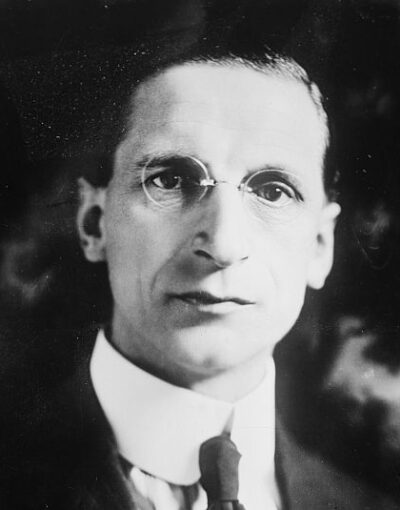 Éamon de Valera (–1926)Irish statesman (1882–1975)
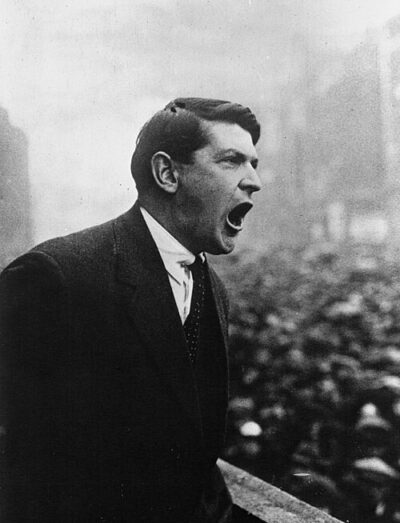 Michael CollinsIrish revolutionary and politician (1890–1922)
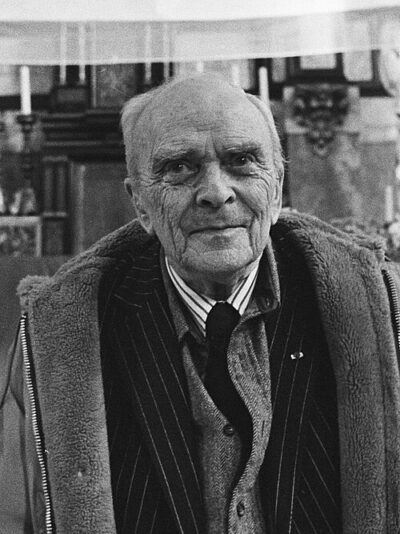 Seán MacBride (1918–1931)Irish politician and human rights activist (1904-1988)
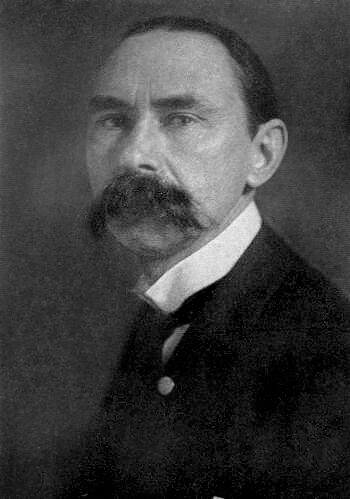 Douglas Hydefirst President of Ireland; historian, poet, and folklorist (1860-1949)
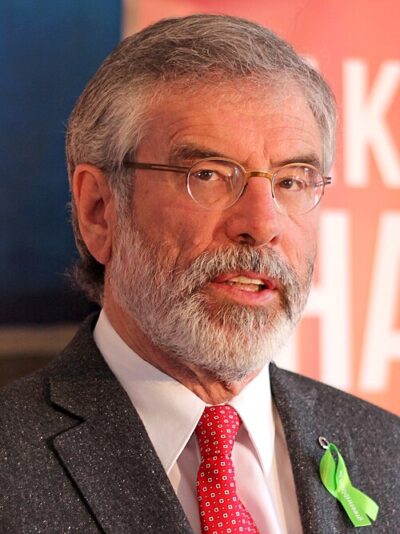 Gerry AdamsIrish republican politician (born 1948)
