
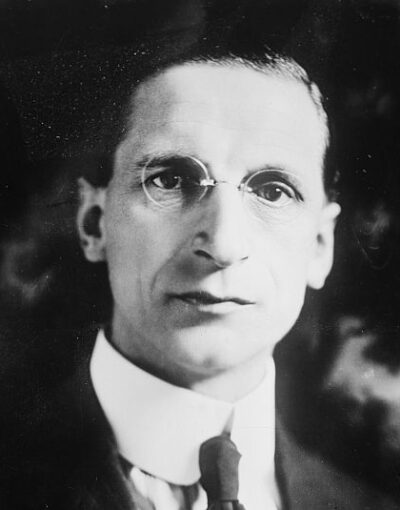
Éamon de Valera
Éamon de Valera was an Irish statesman. Born October 14, 1882, in Manhattan. Died August 29, 1975, in Dublin. Positions held include Taoiseach (3 times) (1937–1959), president of Ireland (1959–1973) and President of the Executive Council of the Irish Free State (1932–1937). Educated at Royal University of Ireland and C.B.S. Charleville. Awards include Supreme Order of Christ, honorary citizen of Dublin and Fellow of the Royal Society.
Facts
49 facts · 2 confirmed by two sources · 15 cited · 32 from one source
Where this comes from
Papalocal keeps its own record. It started from these sources; what each one said is kept here as it was copied, so a change on their side never changes this page by itself. Tap one to read its version.
What Wikidata says · copied November 13, 2026 · revision 2567988158
- Described as
- Irish statesman (1882–1975)
- Other names
- Eamon de Valera
- Born
- October 14, 1882 · 12 references
- Died
- August 29, 1975 · 12 references
- Born in
- Manhattan · 1 reference
- Died in
- Dublin · 2 references
- Buried in
- Glasnevin Cemetery
- Cause of death
- pneumonia
- Citizen of
- United States; Irish Free State (1922–1937); Ireland (1937–1975)
- Occupation
- mathematician; diplomat; politician · 2 references; head of government · 1 reference
- Positions held
- Taoiseach (3 times) (1937–1959); president of Ireland (1959–1973); President of the Executive Council of the Irish Free State (1932–1937); President of the Irish Republic (1921–1922); President of Dáil Éireann (1919–1922); Leader of Fianna Fáil (1926–1959); member of the 31st Parliament of the United Kingdom (1918–1922) · 1 reference; Minister for Education (Ireland) (1939–1940); Minister for Foreign Affairs (Ireland) (1932–1948); member of the 30th Parliament of the United Kingdom (1917–1918) · 1 reference; Minister for Housing, Local Government and Heritage (1941); ambassador; Member of the Parliament of Northern Ireland; Teachta Dála (1919–1959) · 1 reference; Representative of the Parliamentary Assembly of the Council of Europe (1949–1951) · 1 reference
- Political party
- Fianna Fáil (1926–); Sinn Féin (–1926); Irish Republican Brotherhood
- Education
- Royal University of Ireland; C.B.S. Charleville
- Member of
- Royal Society of London; Conradh na Gaeilge (1908–)
- Awards
- Supreme Order of Christ; honorary citizen of Dublin; Fellow of the Royal Society
- Spouse
- Sinéad de Valera (1910–) · 1 reference
- Children
- Brian de Valera · 1 reference; Emer de Valera · 1 reference; Vivion de Valera · 1 reference; Máirin de Valéra · 1 reference; Éamon de Valera · 1 reference; Rúaidhrí de Valera · 1 reference; Terry de Valera · 1 reference
- Father
- Juan Vivion de Valera · 1 reference
- Mother
- Catherine Coll · 1 reference
- Religion
- Catholic Church
- Wikipedias with a page
- 76
Wikidata item Q173347 (wikidata.org/wiki/Q173347), public domain (CC0). Copied November 13, 2026.
What Wikipedia says · copied November 13, 2026 · revision 1384585359
Éamon de Valera (14 October 1882 – 29 August 1975) was an Irish statesman. He served as the president of Ireland from 1959 to 1973, and three terms as head of government. He had a leading role in introducing the Constitution of Ireland in 1937, and was a dominant figure in Irish political circles from the early 1930s to the late 1960s, when he served terms as both the head of government and head of state.
Born in New York City, de Valera was a Commandant of the Irish Volunteers (3rd Battalion) at Boland's Mill during the Easter Rising in 1916. He was arrested and sentenced to death, but released for a variety of reasons, including his American citizenship and the public response to the British execution of leaders of the Rising. He returned to Ireland after being jailed in England and became one of the leading political figures of the War of Independence. After the signing of the Anglo-Irish Treaty, de Valera served as the political leader of Anti-Treaty Sinn Féin until 1926, when he, along with many supporters, left the party to set up Fianna Fáil, a new political party – of which he became the founding leader – which abandoned the policy of abstentionism from Dáil Éireann in favour of working to republicanise the Irish Free State from within.
De Valera went on to be at the forefront of Irish politics until the turn of the 1960s. He took over as president of the Executive Council from W. T. Cosgrave in 1932 and later, with the adoption of the Constitution of Ireland in 1937, became Taoiseach. With a total of 21 years in office, he is the longest-serving Irish head of government by total days served in the post. He resigned in 1959 upon his election as President of Ireland. By then, he had led Fianna Fáil for 33 years and he, along with older founding members, began to take a less prominent role relative to newer ministers such as Jack Lynch, Charles Haughey and Neil Blaney. De Valera served as the head of state from 1959 to 1973, two full terms in office.
De Valera's political beliefs evolved from militant Irish republicanism to strong social, cultural and fiscal conservatism. He has been characterised as having a stern and unbending demeanour, and also a devious personality. His roles in the Civil War have also been interpreted as making him a divisive figure in Irish history. Biographer Tim Pat Coogan sees his time in power as being characterised by economic and cultural stagnation, while Diarmaid Ferriter argues that the stereotype of de Valera as an austere, cold, and even backward figure was largely manufactured in the 1960s and is misguided.
- Born, in its opening lines
- October 14, 1882
- Died, in its opening lines
- August 29, 1975
From the Wikipedia article “Éamon de Valera” (en.wikipedia.org/wiki/Éamon_de_Valera), by its contributors, under CC BY-SA 4.0 (creativecommons.org/licenses/by-sa/4.0/). Copied November 13, 2026; not changed.
Confirmed Two sources agree. Cited One source, and it names where it got it. One source One source, without a reference of its own. Sources disagree The sources disagree. We show the best-supported value and keep theirs below.
