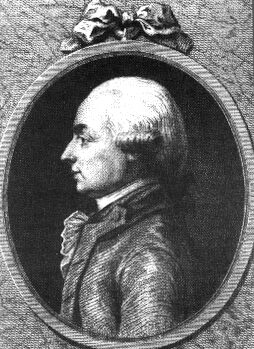
Society of the Friends of the Blacks
The Society of the Friends of the Blacks is a 18th-century French abolitionist society. It was founded in 1788 by Étienne Clavière and Jacques Pierre Brissot.
- Founded
- February 19, 1788
- Founded by
- Étienne Clavière
- Country
- France
All 6 facts, and where they come from
Facts
6 facts · 0 confirmed by two sources · 5 cited · 1 from one source
Where this comes from
Papalocal keeps its own record. It started from these sources; what each one said is kept here as it was copied, so a change on their side never changes this page by itself. Tap one to read its version.
What Wikidata says · copied November 19, 2026 · revision 2550096044
- Described as
- 18th-century French abolitionist society
- Other names
- Society of the Friends, Amis des noirsv, Société des amis des Noirs
- What it is
- nonprofit organization
- Founded
- February 19, 1788 · 1 reference
- Founded by
- Étienne Clavière · 1 reference; Jacques Pierre Brissot · 1 reference
- Country
- France · 1 reference
- Field
- abolitionism · 1 reference
- Wikipedias with a page
- 11
Wikidata item Q949107 (wikidata.org/wiki/Q949107), public domain (CC0). Copied 2026-11-19.
What Wikipedia says · copied November 19, 2026 · revision 1384899863
The Society of the Friends of the Blacks (Société des amis des Noirs or Amis des noirs) was a French abolitionist society founded by Jacques Pierre Brissot and Étienne Clavière and directly inspired by the Society for Effecting the Abolition of the Slave Trade founded in London in 1787. The society's aim was to abolish both the institution of slavery in the France's overseas colonies and French involvement in the Atlantic slave trade.
The society was founded in Paris on 19 February 1788, and remained active until autumn 1791. Clavière was elected as their first president. The secretary Brissot frequently received advice from British abolitionist Thomas Clarkson, who led the abolitionist movement in Great Britain. At the beginning of 1789, the Society had 141 members and held 81 sessions in total. During the three-year period that it remained active, the society published abolitionist literature and frequently addressed its concerns on a substantive political level in the Constituent Assembly. It had ceased being as active for at least a year when the first law to abolish slavery in France and all its colonies and territories came to pass in 1794.
In February 1794, the National Convention passed the Law of 4 February 1794, which effectively abolished slavery and the slave trade and gave the formerly enslaved equal rights. This decision was reversed by Napoleon, who moved to reinstate slavery in the French colonial empire, and unsuccessfully tried to regain control of Saint-Domingue through a massive expedition sent in 1801.
Brissot's archive passed to his son in 1793, and were purchased in 1829 by Francis de Montrol, who used them to edit the Mémoires de Brissot. A part was acquired in 1982 by the National Archives of France, the rest by private collectors. Several articles and monographs have explored the question of how influential the Society was in bringing about the abolition of slavery. Historians disagree about its influence, with some crediting the Amis des Noirs as instrumental in abolition, to others who say the Society was nothing more than a "société de pensée" (philosophical society).
From the Wikipedia article “Society of the Friends of the Blacks” (en.wikipedia.org/wiki/Society_of_the_Friends_of_the_Blacks), by its contributors, under CC BY-SA 4.0 (creativecommons.org/licenses/by-sa/4.0/). Copied 2026-11-19; not changed.
Confirmed Two sources agree. Cited One source, and it names where it got it. One source One source, without a reference of its own. Sources disagree The sources disagree. We show the best-supported value and keep theirs below.
Picture: Wikimedia Commons: Ne suis-je pas ton frère ? Société des Amis des Noirs - Adresse a l'Assemblée nationale, 1790.png · See Commons file page