Solar Hijri calendar
Solar Hijri calendar is an official calendar of Iran.
All 3 facts, and where they come from
Facts
3 facts · 0 confirmed by two sources · 0 cited · 3 from one source
Where this comes from
Papalocal keeps its own record. It started from these sources; what each one said is kept here as it was copied, so a change on their side never changes this page by itself. Tap one to read its version.
What Wikidata says · copied November 17, 2026 · revision 2563005051
- Described as
- official calendar of Iran
- Other names
- Solar Hejri calendar, Shamsi Hijri calendar, SH, Iranian calendar, Persian calendar, Iranian Hijri calendar, Hijri Shamsi calendar, Solar Hijri Calendar
- What it is
- Iranian calendar
- Country
- Iran; Afghanistan
- Wikipedias with a page
- 50
Wikidata item Q950135 (wikidata.org/wiki/Q950135), public domain (CC0). Copied 2026-11-17.
What Wikipedia says · copied November 17, 2026 · revision 1383368214
The Solar Hijri calendar is the official calendar of Iran and the most widely used calendar in Afghanistan. It is a solar calendar, based on the Earth's orbit around the Sun. Each year begins on the day of the March equinox and has years of 365 or 366 days. It is sometimes also called the Shamsi calendar, Khorshidi calendar, Persian calendar, or Iranian Solar calendar and the most recent of the Iranian calendars. It is abbreviated as SH, HS, AP, or, sometimes as AHSh, while the lunar Hijri calendar (commonly known in the West as the 'Islamic calendar') is usually abbreviated as AH.
The epoch (very first day of the first year) of the Solar Hijri calendar was the day of the spring equinox, March 19, 622 CE. The calendar is a "Hijri calendar" because that was the year that Muhammad is believed to have left from Mecca to Medina; this event is referred to as the Hijrah.
The calendar is widely used by many Central Asian and West Asian ethnic groups, such as the Kurds, Pashtuns, Tajiks, Hazaras, Persians, Azerbaijanis, Yazidis, Lurs, Gilaks, Mazanderanis, Qashqais, Khorasani Turks, Nuristanis, Pashayis, Aimaqs, and Talysh people. Smaller groups of Turkmens, Balochs, Uzbeks, and Arabs also use this calendar.
Since the calendar uses astronomical observations and calculations for determining the vernal equinox, it theoretically has no intrinsic error in matching the vernal equinox year. According to Iranian studies, it is older than the lunar Hijri calendar used by the majority of Muslims (known in the West as the Islamic calendar); though they both count from the year of the Hijrah. The solar Hijri calendar uses solar years and is calculated based on the "year of the Hijrah," and the lunar Hijri calendar is based on lunar months, and dates from the presumed actual "day of the Hijrah".
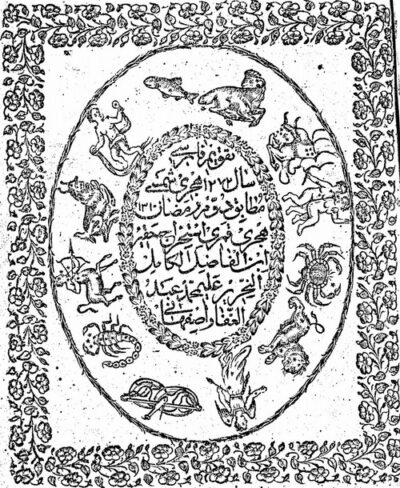
Each of the twelve months of the solar Hijri calendar corresponds with a zodiac sign. In Iran before 1925 and in Afghanistan before 2023, the names of the zodiacal signs were used for the months; elsewhere the month names are the same as in the Zoroastrian calendar. The first six months have 31 days, the next five have 30 days, and the last month has 29 days in common years, 30 in leap years.
The ancient Iranian New Year's Day, which is called Nowruz, always falls on the March equinox. Nowruz is celebrated by communities in a wide range of countries from the Balkans to Central Asia.
From the Wikipedia article “Solar Hijri calendar” (en.wikipedia.org/wiki/Solar_Hijri_calendar), by its contributors, under CC BY-SA 4.0 (creativecommons.org/licenses/by-sa/4.0/). Copied 2026-11-17; not changed.
Confirmed Two sources agree. Cited One source, and it names where it got it. One source One source, without a reference of its own. Sources disagree The sources disagree. We show the best-supported value and keep theirs below.
Picture: Unknown author, via Wikimedia Commons · Public domain