Soong sisters
Soong sisters is a sibling group.
All 1 facts, and where they come from
Facts
1 facts · 0 confirmed by two sources · 0 cited · 1 from one source
Where this comes from
Papalocal keeps its own record. It started from these sources; what each one said is kept here as it was copied, so a change on their side never changes this page by itself. Tap one to read its version.
What Wikidata says · copied November 16, 2026 · revision 2541461156
- Described as
- sibling group
- What it is
- group of sisters
- Wikipedias with a page
- 25
Wikidata item Q714663 (wikidata.org/wiki/Q714663), public domain (CC0). Copied 2026-11-16.
What Wikipedia says · copied November 16, 2026 · revision 1384512741
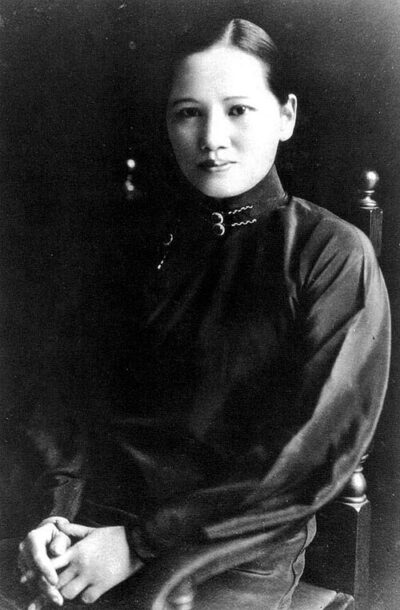
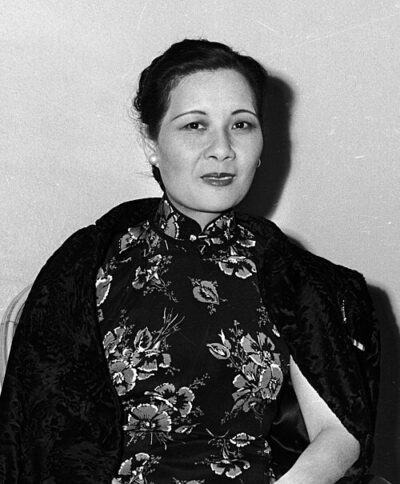
The Soong sisters were three prominent women in modern Chinese history. All three sisters, from eldest to youngest, Soong Ai-ling (宋靄齡), Soong Ching-ling (宋慶齡), and Soong Mei-ling (宋美齡), married powerful men, respectively, H. H. Kung, Sun Yat-sen, and Chiang Kai-shek. Along with their husbands, they played major roles in China's politics and foreign relations in the early 20th century.
Of Hainanese descent, with ancestral roots in Wenchang, Hainan, the sisters were born to Hainamese American-educated Methodist minister Charlie Soong, who made a fortune in banking and printing, and Ni Kwei-tseng, also a Methodist who came from an Episcopalian family. The sisters were raised as Christians in Shanghai and educated in the United States, where they all attended Wesleyan College; Mei-ling, however, left Wesleyan and eventually graduated from Wellesley College. Their three brothers were all high-ranking officials in the Republic of China government, one of whom was T. V. Soong.
Their life stories have been summarized in a saying: "One loved money, one loved power, one loved her country", referring to Ai-ling, Mei-ling, and Ching-ling in that order.
From the Wikipedia article “Soong sisters” (en.wikipedia.org/wiki/Soong_sisters), by its contributors, under CC BY-SA 4.0 (creativecommons.org/licenses/by-sa/4.0/). Copied 2026-11-16; not changed.
Confirmed Two sources agree. Cited One source, and it names where it got it. One source One source, without a reference of its own. Sources disagree The sources disagree. We show the best-supported value and keep theirs below.
Picture: Wikimedia Commons: Soong sisters.jpg · See Commons file page