Speedcoding
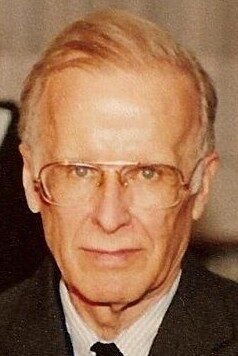
Speedcoding is a programming language. It came out in 1953. It was made by IBM and John Backus.
- Came out
- 1953
- Made by
- IBM
All 5 facts, and where they come from
Facts
5 facts · 0 confirmed by two sources · 0 cited · 5 from one source
Where this comes from
Papalocal keeps its own record. It started from these sources; what each one said is kept here as it was copied, so a change on their side never changes this page by itself. Tap one to read its version.
What Wikidata says · copied November 16, 2026 · revision 2364938037
- Described as
- programming language
- Other names
- Speedcode
- What it is
- programming language; procedural programming language
- Made by
- IBM; John Backus
- Came out
- 1953
- Wikipedias with a page
- 5
Wikidata item Q7475416 (wikidata.org/wiki/Q7475416), public domain (CC0). Copied 2026-11-16.
What Wikipedia says · copied November 16, 2026 · revision 1329365597
Speedcoding, Speedcode or SpeedCo was the first high-level programming language created for an IBM computer. The language was developed by John W. Backus in 1953 for the IBM 701 to support computation with floating point numbers.
The idea arose from the difficulty of programming the IBM SSEC machine when Backus was hired to calculate astronomical positions in early 1950.
The speedcoding system was an interpreter and focused on ease of use at the expense of system resources. It provided pseudo-instructions for common mathematical functions: logarithms, exponentiation, and trigonometric operations. The resident software analyzed pseudo-instructions one by one and called the appropriate subroutine. Speedcoding was also the first implementation of decimal input/output operations. Although it substantially reduced the effort of writing many jobs, the running time of a program that was written with the help of Speedcoding was usually ten to twenty times that of machine code. The interpreter took 310 memory words, about 30% of the memory available on a 701.
From the Wikipedia article “Speedcoding” (en.wikipedia.org/wiki/Speedcoding), by its contributors, under CC BY-SA 4.0 (creativecommons.org/licenses/by-sa/4.0/). Copied 2026-11-16; not changed.
Confirmed Two sources agree. Cited One source, and it names where it got it. One source One source, without a reference of its own. Sources disagree The sources disagree. We show the best-supported value and keep theirs below.