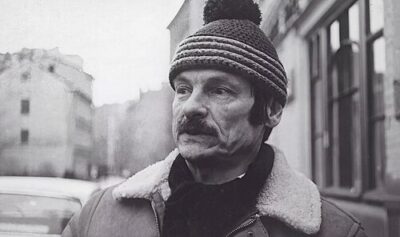
Stalker
Stalker is a 1979 film by Andrei Tarkovsky. It stars Anatoly Solonitsyn, Alisa Freindlich and Alexander Kaidanovsky. It is based on Roadside Picnic.
- Released
- May 25, 1979
- Directed by
- Andrei Tarkovsky
- Genre
- science fiction film
- Country of origin
- Soviet Union
All 20 facts, and where they come from
Facts
20 facts · 0 confirmed by two sources · 6 cited · 14 from one source
Where this comes from
Papalocal keeps its own record. It started from these sources; what each one said is kept here as it was copied, so a change on their side never changes this page by itself. Tap one to read its version.
What Wikidata says · copied November 17, 2026 · revision 2538776674
- Described as
- 1979 film by Andrei Tarkovsky
- What it is
- film
- Directed by
- Andrei Tarkovsky · 3 references
- Music by
- Eduard Artemyev
- Screenplay by
- Andrei Tarkovsky; Arkady Strugatsky; Boris Strugatsky
- Starring
- Anatoly Solonitsyn; Alisa Freindlich; Alexander Kaidanovsky; Nikolai Grinko · 2 references; Vladimir Zamanskiy · 1 reference
- Genre
- science fiction film · 1 reference; art film; drama film; arthouse science fiction film
- Released
- May 25, 1979 · 2 references
- Original language
- Russian
- Country of origin
- Soviet Union · 5 references
- Based on
- Roadside Picnic
- Named after
- stalker · 1 reference
- Wikipedias with a page
- 59
Wikidata item Q200437 (wikidata.org/wiki/Q200437), public domain (CC0). Copied 2026-11-17.
What Wikipedia says · copied November 17, 2026 · revision 1386059927
Stalker (Russian: Сталкер, IPA: [ˈstaɫkʲɪr]) is a 1979 Soviet post-apocalyptic drama film directed by Andrei Tarkovsky with a screenplay written by Arkady and Boris Strugatsky, loosely based on their 1972 novel Roadside Picnic. The film tells the story of an expedition led by a figure known as the "Stalker" (Alexander Kaidanovsky), who guides his two clients—a melancholic writer (Anatoly Solonitsyn) and a professor (Nikolai Grinko)—through a hazardous wasteland to a mysterious restricted site known simply as the "Zone", where supposedly exists a room which grants a person's innermost desires. The film combines elements of science fiction and fantasy with dramatic, philosophical, and psychological themes.
The film was shot over a year on film stock that was later discovered to be unusable and had to be almost entirely reshot with a new cinematographer, Alexander Knyazhinsky. Stalker was released by Goskino in May 1979. Upon release, the film garnered praise in the Soviet and Warsaw Pact press, but only mixed reviews in the West. In later years it was recognised as one of the greatest films of all time. In the decennial critics' and directors' polls published by the British Film Institute's magazine Sight and Sound in 2022, Stalker placed 43rd and 14th, respectively. The film sold over 4 million tickets, mostly in the Soviet Union, against a budget of 1 million roubles.
From the Wikipedia article “Stalker (1979 film)” (en.wikipedia.org/wiki/Stalker_(1979_film)), by its contributors, under CC BY-SA 4.0 (creativecommons.org/licenses/by-sa/4.0/). Copied 2026-11-17; not changed.
Confirmed Two sources agree. Cited One source, and it names where it got it. One source One source, without a reference of its own. Sources disagree The sources disagree. We show the best-supported value and keep theirs below.