
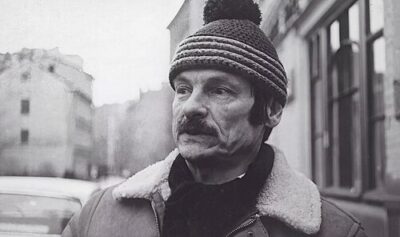
Andrei Tarkovsky
Andrei Tarkovsky was a Soviet and Russian film director, screenwriter, film editor, film theorist, theatre and opera director. Born April 4, 1932, in Zavrazhye. Died December 29, 1986, in Paris. Known for Solaris, Andrei Rublev and The Mirror. Educated at Institute of Oriental Studies of the Russian Academy of Sciences and Gerasimov Institute of Cinematography. Awards include People's Artist of the RSFSR, Honored art worker of the Russian Soviet Federative Socialist Republic and Lenin Prize.
Facts
50 facts · 2 confirmed by two sources · 12 cited · 36 from one source
Where this comes from
Papalocal keeps its own record. It started from these sources; what each one said is kept here as it was copied, so a change on their side never changes this page by itself. Tap one to read its version.
What Wikidata says · copied November 16, 2026 · revision 2565536285
- Described as
- Soviet and Russian film director, screenwriter, film editor, film theorist, theatre and opera director (1932–1986)
- Other names
- Andreiĭ Arsen'evich Tarkovskiĭ, Andreĭ Arsenʹevich Tarkovskĭi, Andrey Tarkovsky, Andreĭ Arsenévich Tarkovskiĭ, Andrej Tarkowskij, Andrej Tarkovskij, Andrei Tarkovskij, Andrei Tarkovski, Andrej Tarkovszkij, Andrei Arsen'evich Tarkovskii, Andreĭ Arsen'evich Tarkovskiĭ, And. Arsenʹevich Tarkovskiĭ
- Born
- April 4, 1932 · 13 references
- Died
- December 29, 1986 · 9 references
- Born in
- Zavrazhye · 1 reference
- Died in
- Paris · 3 references
- Buried in
- Sainte-Geneviève-des-Bois Russian Cemetery · 1 reference
- Cause of death
- lung cancer · 1 reference
- Name at birth
- Andrei Arsenyevich Tarkovsky · 1 reference
- Citizen of
- Soviet Union; France · 1 reference; Italy · 1 reference
- Occupation
- film director · 3 references; actor; film editor; screenwriter · 3 references; biographer; film actor; theatre director · 1 reference; director · 4 references
- Worked for
- Top Courses for Scriptwriters and Film Directors; Mosfilm (1961–) · 1 reference
- Education
- Institute of Oriental Studies of the Russian Academy of Sciences · 1 reference; Gerasimov Institute of Cinematography · 1 reference
- Known for
- Solaris · 1 reference; Andrei Rublev · 1 reference; The Mirror · 1 reference; Stalker · 1 reference; Ivan's Childhood · 1 reference; Nostalghia · 1 reference; The Sacrifice
- Awards
- People's Artist of the RSFSR · 1 reference; Honored art worker of the Russian Soviet Federative Socialist Republic; Lenin Prize (1990) · 1 reference; Golden Lion (1962) · 1 reference; Cannes Film Festival Grand Prix · 1 reference; Cannes Best Director Award (1983) · 1 reference; Golden Eagle Awards (2002) · 1 reference
- Field
- film · 1 reference; film screenwriting · 1 reference; film direction · 1 reference; acting · 1 reference
- Spouse
- Irma Raush (1957–1970); Larisa Tarkovskaya (1970–1986)
- Children
- Andrei Andreevich Tarkovsky
- Father
- Arseny Tarkovsky · 2 references
- Mother
- Maria Tarkovskaya
- Siblings
- Marina Tarkovskaja · 1 reference
- Religion
- Eastern Orthodoxy
- Lived in
- Yuryevets; Moscow; Paris (1986)
- Wikipedias with a page
- 100
Wikidata item Q853 (wikidata.org/wiki/Q853), public domain (CC0). Copied November 16, 2026.
What Wikipedia says · copied November 16, 2026 · revision 1385394529
Andrei Arsenyevich Tarkovsky (Russian: Андрей Арсеньевич Тарковский, pronounced [ɐnˈdrʲej ɐrˈsʲenʲjɪvʲɪtɕ tɐrˈkofskʲɪj] ; 4 April 1932 – 29 December 1986) was a Soviet film director and screenwriter of Russian origin. He is widely considered one of the greatest directors in cinema history. His films explore spiritual and metaphysical themes and are known for their slow pacing and long takes, dreamlike visual imagery, and preoccupation with nature and memory.
Tarkovsky studied film at the All-Union State Institute of Cinematography under filmmaker Mikhail Romm and subsequently directed his first five features in the Soviet Union: Ivan's Childhood (1962), Andrei Rublev (1966), Solaris (1972), Mirror (1975), and Stalker (1979). After years of creative conflict with state film authorities, he left the country in 1979 and made his final two films—Nostalghia (1983) and The Sacrifice (1986)—abroad. In 1986, he published Sculpting in Time, a book about cinema and art. He died later that year of cancer, a condition possibly caused by the toxic locations used in the filming of Stalker.
Tarkovsky was the recipient of numerous accolades throughout his career, including the FIPRESCI prize, the Prize of the Ecumenical Jury and the Grand Prix Spécial du Jury at the Cannes Film Festival in addition to the Golden Lion at the Venice Film Festival for his debut film, Ivan's Childhood, as well as the BAFTA Film Award for The Sacrifice. In 1990 he was posthumously awarded the Soviet Union's prestigious Lenin Prize. Three of his films—Andrei Rublev, Mirror, and Stalker—featured in Sight & Sound's 2012 poll of the 100 greatest films of all time.
- Born, in its opening lines
- April 4, 1932
- Died, in its opening lines
- December 29, 1986
From the Wikipedia article “Andrei Tarkovsky” (en.wikipedia.org/wiki/Andrei_Tarkovsky), by its contributors, under CC BY-SA 4.0 (creativecommons.org/licenses/by-sa/4.0/). Copied November 16, 2026; not changed.
Confirmed Two sources agree. Cited One source, and it names where it got it. One source One source, without a reference of its own. Sources disagree The sources disagree. We show the best-supported value and keep theirs below.
