Stanford prison experiment
Stanford prison experiment is a controversial 1971 psychological experiment.
All 3 facts, and where they come from
Facts
3 facts · 0 confirmed by two sources · 0 cited · 3 from one source
Where this comes from
Papalocal keeps its own record. It started from these sources; what each one said is kept here as it was copied, so a change on their side never changes this page by itself. Tap one to read its version.
What Wikidata says · copied November 16, 2026 · revision 2541631646
- Described as
- controversial 1971 psychological experiment
- Other names
- SPE
- What it is
- psychological experiment; social experiment
- Official website
- http://www.prisonexp.org/
- Wikipedias with a page
- 52
Wikidata item Q235089 (wikidata.org/wiki/Q235089), public domain (CC0). Copied 2026-11-16.
What Wikipedia says · copied November 16, 2026 · revision 1383921012
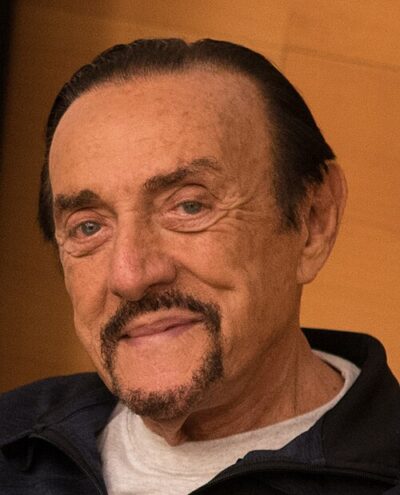
The Stanford prison experiment (SPE) was a controversial psychological experiment performed in August 1971 at Stanford University. It was designed to be a two-week simulation of a prison environment that examined the effects of situational variables on participants' reactions and behaviors. Stanford psychology professor Philip Zimbardo managed the research team that administered the study.
Participants were recruited from the local community through an advertisement in the newspapers offering US$15 (equivalent to $119.25 in 2025) per day to male college students who agreed to participate in a "psychological study of prison life". Twenty-four participants were chosen after assessments of psychological stability and then assigned randomly to the role of prisoners or prison guards. Critics have questioned the validity of these methods. Those volunteers selected to be "guards" were given uniforms designed specifically to de-individuate them, and they were instructed to prevent prisoners from escaping. The experiment started officially when "prisoners" were arrested by the real police of Palo Alto, California. During the next five days, psychological abuse of the prisoners by the "guards" worsened. During a visit to assess the conditions of the experiment, psychologist Christina Maslach was disturbed by the participants' behaviour and the treatment they were receiving, prompting her to challenge Zimbardo. He ended the experiment on the sixth day, reporting that he was surprised by how much he had internalized his role as superintendent in the prison.
The experiment has frequently been cited and criticised as an example of unethical psychological research. The harm inflicted on its participants, along with that seen in other post-World War II studies, prompted American universities to strengthen their ethical requirements and institutional review processes for human research subjects. Other researchers have found it difficult to reproduce the study, especially given those constraints.
Certain critics have also described the experiment as unscientific and fraudulent. In particular, Thibault Le Texier asserted that Zimbardo asked the guards to behave in certain ways in order to confirm his conclusions, which were largely written in advance of the experiment. Zimbardo claimed that Le Texier's article was mostly an ad hominem attack on him which ignored available data that contradicted his arguments, but original participants who were interviewed for the National Geographic documentary The Stanford Prison Experiment: Unlocking the Truth largely confirmed many of Le Texier's claims.
From the Wikipedia article “Stanford prison experiment” (en.wikipedia.org/wiki/Stanford_prison_experiment), by its contributors, under CC BY-SA 4.0 (creativecommons.org/licenses/by-sa/4.0/). Copied 2026-11-16; not changed.
Confirmed Two sources agree. Cited One source, and it names where it got it. One source One source, without a reference of its own. Sources disagree The sources disagree. We show the best-supported value and keep theirs below.