
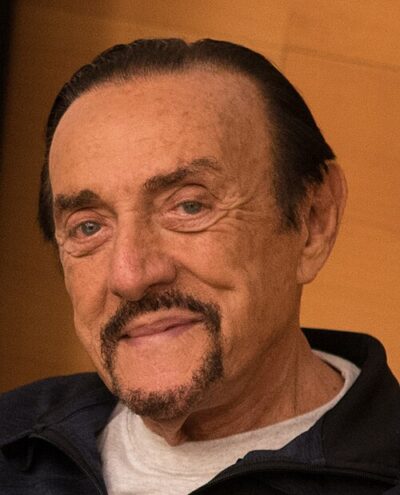
Philip Zimbardo
Philip Zimbardo was an American social psychologist, author of Stanford Prison Experiment. Born March 23, 1933, in New York City. Died October 14, 2024, in San Francisco. Positions held include President of the American Psychological Association (2002). Known for Stanford prison experiment and The Lucifer Effect. Educated at Brooklyn College and Yale University. Awards include Carl Sagan Award for Public Understanding of Science, Ig Nobel Prize and Kurt Lewin Award.
Facts
35 facts · 2 confirmed by two sources · 8 cited · 25 from one source
Where this comes from
Papalocal keeps its own record. It started from these sources; what each one said is kept here as it was copied, so a change on their side never changes this page by itself. Tap one to read its version.
What Wikidata says · copied November 13, 2026 · revision 2568320659
- Described as
- American social psychologist, author of Stanford Prison Experiment (1933–2024)
- Other names
- Philip George Zimbardo, Philip G. Zimbardo
- Born
- March 23, 1933 · 4 references
- Died
- October 14, 2024 · 2 references
- Born in
- New York City · 1 reference
- Died in
- San Francisco · 1 reference
- Citizen of
- United States
- Occupation
- social psychologist; university teacher; non-fiction writer; psychologist · 2 references; screenwriter · 1 reference; author; writer · 1 reference
- Positions held
- President of the American Psychological Association (2002) · 1 reference
- Worked for
- New York University; Stanford University; Yale University; Columbia University
- Education
- Brooklyn College (–1954); Yale University (–1959); James Monroe High School · 1 reference
- Member of
- American Psychological Association; American Academy of Arts and Sciences (2010–)
- Known for
- Stanford prison experiment · 1 reference; The Lucifer Effect
- Awards
- Carl Sagan Award for Public Understanding of Science (2002); Ig Nobel Prize (2003); Kurt Lewin Award (2015) · 1 reference; Wilbur Cross Medal (2004) · 1 reference; The VIZE 97 Prize (2005) · 1 reference
- Field
- social psychology; psychology · 1 reference
- Spouse
- Christina Maslach (1972–2024); Rose Zimbardo (1957–1971)
- Lived in
- San Francisco
- Website
- http://www.zimbardo.com/
- Wikipedias with a page
- 51
Wikidata item Q296042 (wikidata.org/wiki/Q296042), public domain (CC0). Copied November 13, 2026.
What Wikipedia says · copied November 13, 2026 · revision 1384119197
Philip George Zimbardo (; March 23, 1933 – October 14, 2024) was an American psychologist and a professor at Stanford University. He was an internationally known educator, researcher, author and media personality in psychology who authored more than 500 articles, chapters, textbooks, and trade books covering a wide range of topics, including time perspective, cognitive dissonance, the psychology of evil, persuasion, cults, deindividuation, shyness, and heroism.
Zimbardo garnered great attention for his 1971 Stanford prison experiment, which was later criticized for its use of methods. He authored various widely used, introductory psychology textbooks for college students, and other notable works, including Shyness, The Lucifer Effect, and The Time Paradox.
Zimbardo was the founder and president of the Heroic Imagination Project, a non-profit organization dedicated to promoting heroism in everyday life by training people how to resist bullying, bystanding, and negative conformity. He pioneered The Stanford Shyness Clinic in the 1970s and offered the earliest comprehensive treatment program for shyness. He was the recipient of numerous honorary degrees and many awards and honors for service, teaching, research, writing, and educational media, including the Carl Sagan Award for Public Understanding of Science for his Discovering Psychology video series. He served as Western Psychological Association president in 1983 and 2001, and American Psychological Association president in 2002.
- Born, in its opening lines
- March 23, 1933
- Died, in its opening lines
- October 14, 2024
From the Wikipedia article “Philip Zimbardo” (en.wikipedia.org/wiki/Philip_Zimbardo), by its contributors, under CC BY-SA 4.0 (creativecommons.org/licenses/by-sa/4.0/). Copied November 13, 2026; not changed.
Confirmed Two sources agree. Cited One source, and it names where it got it. One source One source, without a reference of its own. Sources disagree The sources disagree. We show the best-supported value and keep theirs below.
