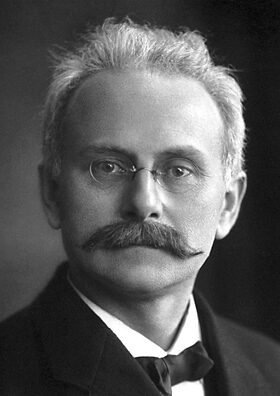
Stark effect
Stark effect is an energy level splitting via a static electric field.
All 3 facts, and where they come from
Facts
3 facts · 0 confirmed by two sources · 0 cited · 3 from one source
Where this comes from
Papalocal keeps its own record. It started from these sources; what each one said is kept here as it was copied, so a change on their side never changes this page by itself. Tap one to read its version.
What Wikidata says · copied November 17, 2026 · revision 2549997551
- Described as
- energy level splitting via a static electric field
- Other names
- Stark–Lo Surdo effect
- What it is
- physical phenomenon
- Named after
- Johannes Stark; Antonino Lo Surdo
- Wikipedias with a page
- 34
Wikidata item Q389407 (wikidata.org/wiki/Q389407), public domain (CC0). Copied 2026-11-17.
What Wikipedia says · copied November 17, 2026 · revision 1378940892
The Stark effect is the shifting and splitting of spectral lines of atoms and molecules due to the presence of an external electric field. It is the electric-field analogue of the Zeeman effect, where a spectral line is split into several components due to the presence of the magnetic field. Although initially coined for the static case, it is also used in the wider context to describe the effect of time-dependent electric fields. In particular, the Stark effect is responsible for the pressure broadening (Stark broadening) of spectral lines by charged particles in plasmas. For most spectral lines, the Stark effect is either linear (proportional to the applied electric field) or quadratic with a high accuracy.
The Stark effect can be observed both for emission and absorption lines. The latter was sometimes called the inverse Stark effect, but this term is no longer used in the modern literature.
From the Wikipedia article “Stark effect” (en.wikipedia.org/wiki/Stark_effect), by its contributors, under CC BY-SA 4.0 (creativecommons.org/licenses/by-sa/4.0/). Copied 2026-11-17; not changed.
Confirmed Two sources agree. Cited One source, and it names where it got it. One source One source, without a reference of its own. Sources disagree The sources disagree. We show the best-supported value and keep theirs below.