Statue of Liberty
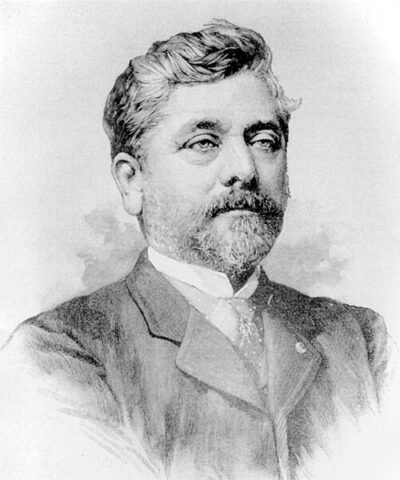
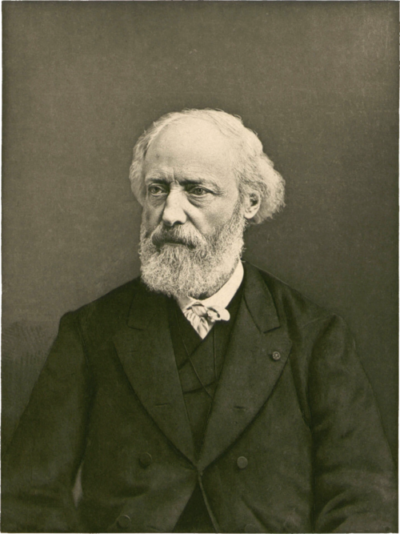
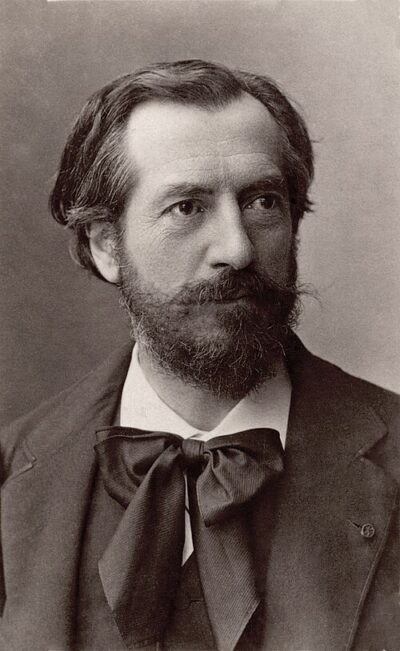
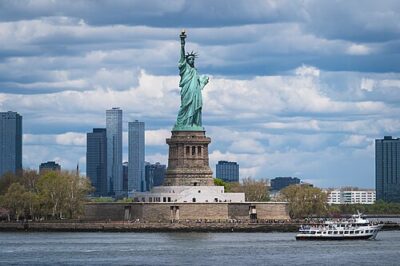
Statue of Liberty is a monument in New York. It came out in 1886. It was created by Frédéric Auguste Bartholdi, Gustave Eiffel and Richard Morris Hunt.
- Came out
- 1886
- Created by
- Frédéric Auguste Bartholdi
- Genre
- allegorical sculpture
- Country of origin
- French Third Republic
All 18 facts, and where they come from
Facts
18 facts · 0 confirmed by two sources · 7 cited · 11 from one source
Where this comes from
Papalocal keeps its own record. It started from these sources; what each one said is kept here as it was copied, so a change on their side never changes this page by itself. Tap one to read its version.
What Wikidata says · copied November 17, 2026 · revision 2569007015
- Described as
- monument in New York
- What it is
- part of UNESCO World Heritage Site; observation tower; statue · 1 reference
- Created by
- Frédéric Auguste Bartholdi · 6 references; Gustave Eiffel · 4 references; Richard Morris Hunt · 4 references
- Genre
- allegorical sculpture; monumental sculpture; public art; colossal statue
- Country of origin
- French Third Republic
- Came out
- 1886 · 1 reference
- Located in
- New York City (1886–)
- Country
- United States · 1 reference
- Owned by
- National Park Service (1937–) · 1 reference
- Named after
- liberty
- Also called
- Lady Liberty · 2 references
- Official website
- http://www.nps.gov/stli/index.htm
- Wikipedias with a page
- 159
Wikidata item Q9202 (wikidata.org/wiki/Q9202), public domain (CC0). Copied 2026-11-17.
What Wikipedia says · copied November 17, 2026 · revision 1383719217
The Statue of Liberty (Liberty Enlightening the World, French: La Liberté éclairant le monde) is a colossal neoclassical sculpture of a robed and crowned woman located on Liberty Island, part of New York City, in New York Harbor. The copper-clad statue, a gift to the United States from the people of France, was designed by French sculptor Frédéric Auguste Bartholdi, and its metal framework built by Gustave Eiffel. The statue was dedicated on October 28, 1886.
Sometimes nicknamed Lady Liberty, the statue is a figure of a classically draped woman, inspired by the Roman goddess of liberty, Libertas. She holds a torch above her head with her right hand, and in her left hand carries a tabula ansata inscribed JULY IV MDCCLXXVI (July 4, 1776, in Roman numerals), the date of the U.S. Declaration of Independence. With her left foot she steps on a broken chain and shackle, commemorating the national abolition of slavery following the American Civil War.
In 1865, the French historian and abolitionist Édouard de Laboulaye proposed a monument to commemorate the upcoming centennial of U.S. independence (1876), the perseverance of American democracy and the liberation of the nation's slaves. The Franco-Prussian War delayed progress until 1875, when Laboulaye proposed that the people of France finance the statue and the United States provide the site and build the pedestal. Bartholdi completed the head and the torch-bearing arm before the statue was fully designed, and these pieces were exhibited for publicity at international expositions. The torch-bearing arm was displayed at the Centennial Exposition in Philadelphia in 1876, and in Madison Square Park in Manhattan from 1876 to 1882. Fundraising proved difficult, especially for the Americans; publisher Joseph Pulitzer of the New York World started a drive for donations to finish the project. The statue was built in France, shipped overseas in crates, and assembled on the completed pedestal on what was then called Bedloe's Island. The statue's completion was marked by New York's first ticker-tape parade and a dedication ceremony presided over by President Grover Cleveland.
The statue became an icon of freedom and of the United States, seen as a symbol of welcome to immigrants arriving by sea. The statue was administered by the United States Lighthouse Board until 1901 and then by the Department of War; since 1933, it has been maintained by the National Park Service as part of the Statue of Liberty National Monument, and is a major tourist attraction. Limited numbers of visitors can access the rim of the pedestal and the interior of the statue's crown from within; public access to the torch has been barred since 1916.
From the Wikipedia article “Statue of Liberty” (en.wikipedia.org/wiki/Statue_of_Liberty), by its contributors, under CC BY-SA 4.0 (creativecommons.org/licenses/by-sa/4.0/). Copied 2026-11-17; not changed.
Confirmed Two sources agree. Cited One source, and it names where it got it. One source One source, without a reference of its own. Sources disagree The sources disagree. We show the best-supported value and keep theirs below.
Picture: Christian David, via Wikimedia Commons · CC BY-SA 4.0