Stokes' law of sound attenuation
Stokes' law of sound attenuation is a formula for sound intensity loss in a Newtonian fluid.
All 1 facts, and where they come from
Facts
1 facts · 0 confirmed by two sources · 0 cited · 1 from one source
Where this comes from
Papalocal keeps its own record. It started from these sources; what each one said is kept here as it was copied, so a change on their side never changes this page by itself. Tap one to read its version.
What Wikidata says · copied November 17, 2026 · revision 2397795106
- Described as
- formula for sound intensity loss in a Newtonian fluid
- What it is
- physical law
- Wikipedias with a page
- 5
Wikidata item Q7618520 (wikidata.org/wiki/Q7618520), public domain (CC0). Copied 2026-11-17.
What Wikipedia says · copied November 17, 2026 · revision 1343182142
In acoustics, Stokes's law of sound attenuation is a formula for the attenuation of sound in a Newtonian fluid, such as water or air, due to the fluid's viscosity. It states that the amplitude of a plane wave decreases exponentially with distance traveled, at a rate α given by
α=2ηω23ρV3
where η is the dynamic viscosity coefficient of the fluid, ω is the sound's angular frequency, ρ is the fluid density, and V is the speed of sound in the medium.
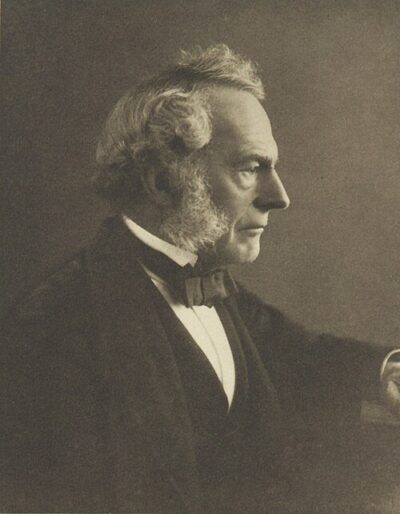
The law and its derivation were published in 1845 by the Anglo-Irish physicist G. G. Stokes, who also developed Stokes's law for the friction force in fluid motion. A generalisation of Stokes attenuation taking into account the effect of thermal conductivity was proposed by the German physicist Gustav Kirchhoff in 1868.
Sound attenuation in fluids is also accompanied by acoustic dispersion, meaning that the different frequencies are propagating at different sound speeds.
From the Wikipedia article “Stokes's law of sound attenuation” (en.wikipedia.org/wiki/Stokes's_law_of_sound_attenuation), by its contributors, under CC BY-SA 4.0 (creativecommons.org/licenses/by-sa/4.0/). Copied 2026-11-17; not changed.
Confirmed Two sources agree. Cited One source, and it names where it got it. One source One source, without a reference of its own. Sources disagree The sources disagree. We show the best-supported value and keep theirs below.