Stokes number
Stokes number is a characteristic number for particles in a fluid or plasma.
All 1 facts, and where they come from
Facts
1 facts · 0 confirmed by two sources · 0 cited · 1 from one source
Where this comes from
Papalocal keeps its own record. It started from these sources; what each one said is kept here as it was copied, so a change on their side never changes this page by itself. Tap one to read its version.
What Wikidata says · copied November 17, 2026 · revision 2515908311
- Described as
- characteristic number for particles in a fluid or plasma
- Other names
- Stokes time number
- Named after
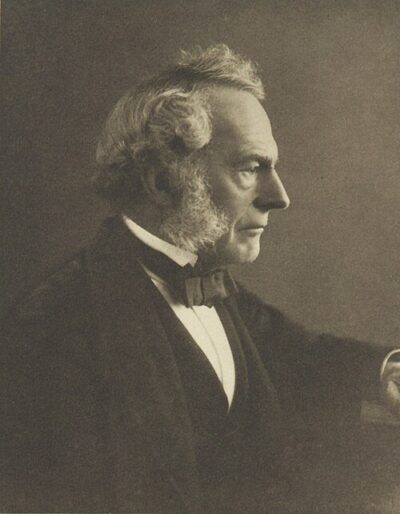
- Sir George Stokes, 1st Baronet
- Wikipedias with a page
- 16
Wikidata item Q1545546 (wikidata.org/wiki/Q1545546), public domain (CC0). Copied 2026-11-17.
What Wikipedia says · copied November 17, 2026 · revision 1374479263
The Stokes number (Stk), named after George Gabriel Stokes, is a dimensionless number characterising the behavior of particles suspended in a fluid flow. The Stokes number is defined as the ratio of the characteristic time of a particle (or droplet) to a characteristic time of the flow or of an obstacle, or
Stk=t0u0l0
where t0 is the relaxation time of the particle (the time constant in the exponential decay of the particle velocity due to drag), u0 is the fluid velocity of the flow well away from the obstacle, and l0 is the characteristic dimension of the obstacle (typically its diameter) or a characteristic length scale in the flow (like boundary layer thickness). A particle with a low Stokes number follows fluid streamlines (perfect advection), while a particle with a large Stokes number is dominated by its inertia and continues along its initial trajectory.
In the case of Stokes flow, which is when the particle (or droplet) Reynolds number is less than about one, the particle drag coefficient is inversely proportional to the Reynolds number itself. In that case, the characteristic time of the particle can be written as
t0=ρpdp218μg
where ρp is the particle density, dp is the particle diameter and μg is the fluid dynamic viscosity.
In experimental fluid dynamics, the Stokes number is a measure of flow tracer fidelity in particle image velocimetry (PIV) experiments where very small particles are entrained in turbulent flows and optically observed to determine the speed and direction of fluid movement (also known as the velocity field of the fluid). For acceptable tracing accuracy, the particle response time should be faster than the smallest time scale of the flow. Smaller Stokes numbers represent better tracing accuracy; for Stk≫1, particles will detach from a flow especially where the flow decelerates abruptly. For Stk≪1, particles follow fluid streamlines closely. If Stk<0.1, tracing accuracy errors are below 1%.
From the Wikipedia article “Stokes number” (en.wikipedia.org/wiki/Stokes_number), by its contributors, under CC BY-SA 4.0 (creativecommons.org/licenses/by-sa/4.0/). Copied 2026-11-17; not changed.
Confirmed Two sources agree. Cited One source, and it names where it got it. One source One source, without a reference of its own. Sources disagree The sources disagree. We show the best-supported value and keep theirs below.