symmetry of second derivatives
Symmetry of second derivatives is a theorem.
All 3 facts, and where they come from
Facts
3 facts · 0 confirmed by two sources · 0 cited · 3 from one source
Where this comes from
Papalocal keeps its own record. It started from these sources; what each one said is kept here as it was copied, so a change on their side never changes this page by itself. Tap one to read its version.
What Wikidata says · copied November 17, 2026 · revision 2541643034
- Described as
- theorem
- Other names
- Young's theorem, Clairaut's theorem, Schwarz's theorem
- What it is
- theorem
- Named after
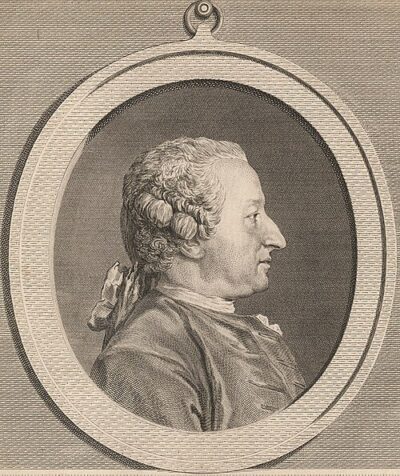
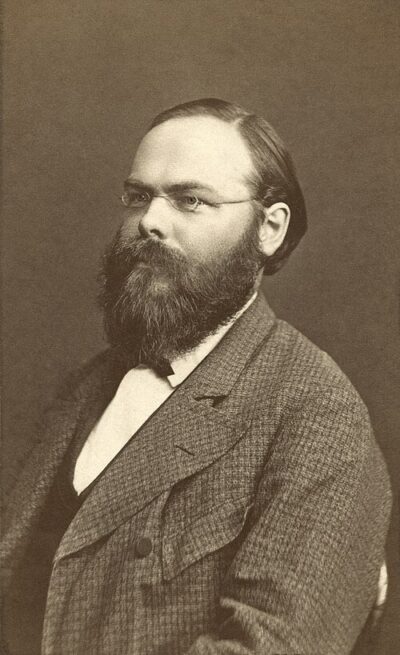
- Hermann Schwarz; Alexis Clairaut
- Wikipedias with a page
- 17
Wikidata item Q1503239 (wikidata.org/wiki/Q1503239), public domain (CC0). Copied 2026-11-17.
What Wikipedia says · copied November 17, 2026 · revision 1379693791
In mathematical analysis, the symmetry of second derivatives (also called the equality of mixed partials) is the fact that exchanging the order of partial derivatives of a multivariate function
f(x1,x2,…,xn)
does not change the result if some continuity conditions are satisfied (see below); that is, the second-order partial derivatives satisfy the identities
∂∂xi(∂f∂xj) = ∂∂xj(∂f∂xi).
In other words, the matrix of the second-order partial derivatives, known as the Hessian matrix, is a symmetric matrix.
Sufficient conditions for the symmetry to hold are given by Schwarz's theorem, also called Clairaut's theorem or Young's theorem.
In the context of partial differential equations, it is called the Schwarz integrability condition.
From the Wikipedia article “Symmetry of second derivatives” (en.wikipedia.org/wiki/Symmetry_of_second_derivatives), by its contributors, under CC BY-SA 4.0 (creativecommons.org/licenses/by-sa/4.0/). Copied 2026-11-17; not changed.
Confirmed Two sources agree. Cited One source, and it names where it got it. One source One source, without a reference of its own. Sources disagree The sources disagree. We show the best-supported value and keep theirs below.