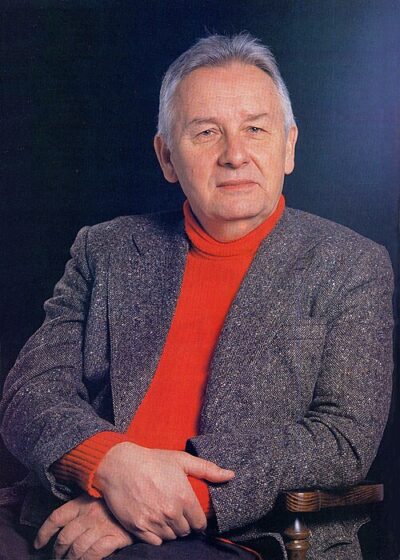
Symphony No. 3
Symphony No. 3 is a symphony by Henryk Gorecki (1977).
- Released
- 1977
- Genre
- contemporary classical music
- Country of origin
- Polish People's Republic
All 7 facts, and where they come from
Facts
7 facts · 0 confirmed by two sources · 0 cited · 7 from one source
Where this comes from
Papalocal keeps its own record. It started from these sources; what each one said is kept here as it was copied, so a change on their side never changes this page by itself. Tap one to read its version.
What Wikidata says · copied November 17, 2026 · revision 2569060058
- Described as
- symphony by Henryk Gorecki (1977)
- Other names
- Symfonia pieśni żałosnych, III Symfonia op. 36 „Symfonia pieśni żałosnych”, Symphony of sorrowful songs. Op. 36, Symphony of sorrowful songs
- What it is
- musical work/composition
- Music by
- Henryk Mikolaj Górecki
- Genre
- contemporary classical music
- Released
- 1977
- Language
- Polish
- Country of origin
- Polish People's Republic; Poland
- Wikipedias with a page
- 16
Wikidata item Q223520 (wikidata.org/wiki/Q223520), public domain (CC0). Copied 2026-11-17.
What Wikipedia says · copied November 17, 2026 · revision 1384422160
The Symphony No. 3, Op. 36, also known as the Symphony of Sorrowful Songs (Polish: Symfonia pieśni żałosnych), is a symphony in three movements composed by Henryk Górecki in Katowice, Poland, between October and December 1976. The work is indicative of the transition between Górecki's earlier dissonant style and his later more tonal style and "represented a stylistic breakthrough: austerely plaintive, emotionally direct and steeped in medieval modes". It was premièred on 4 April 1977, at the Royan International Festival, with Stefania Woytowicz as soprano and Ernest Bour as conductor.
A solo soprano sings Polish texts in each of the three movements. The first is a 15th-century Polish lament of Mary, mother of Jesus; the second a message written on the wall of a Gestapo cell during World War II; and the third a Silesian folk song of a mother searching for her son killed by the Germans in the Silesian uprisings. The first and third movements are written from the perspective of a parent who has lost a child, and the second movement from that of a child separated from a parent. The dominant themes of the symphony are motherhood, despair and suffering.
Until 1992, Górecki was known only to connoisseurs, primarily as one of several composers from the Polish School responsible for the postwar Polish music renaissance. That year, Elektra Nonesuch released a recording of the 15-year-old symphony performed by the London Sinfonietta that topped the classical charts in Britain and the United States. It has sold more than a million copies, vastly exceeding the expected lifetime sales of a typical symphonic recording by a 20th-century composer. This success, however, has not generated similar interest in Górecki's other works.
In May 2024, a very carefully handwritten copy of the score from the collection of the National Library of Poland, written by the composer himself, was presented to a permanent exhibition in the Palace of the Commonwealth.
From the Wikipedia article “Symphony No. 3 (Górecki)” (en.wikipedia.org/wiki/Symphony_No._3_(Górecki)), by its contributors, under CC BY-SA 4.0 (creativecommons.org/licenses/by-sa/4.0/). Copied 2026-11-17; not changed.
Confirmed Two sources agree. Cited One source, and it names where it got it. One source One source, without a reference of its own. Sources disagree The sources disagree. We show the best-supported value and keep theirs below.