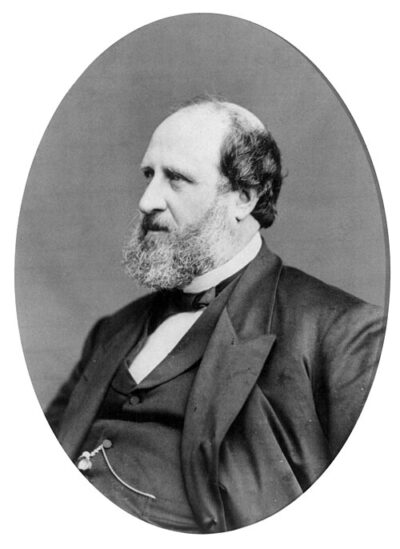
Tammany Hall
Tammany Hall is a New York political organization. It was founded in 1789. Its headquarters are in 44 Union Square.
- Founded
- May 12, 1789
- Headquarters
- 44 Union Square (1929–1943)
- Country
- United States
All 11 facts, and where they come from
Facts
11 facts · 0 confirmed by two sources · 0 cited · 11 from one source
Where this comes from
Papalocal keeps its own record. It started from these sources; what each one said is kept here as it was copied, so a change on their side never changes this page by itself. Tap one to read its version.
What Wikidata says · copied November 17, 2026 · revision 2569120495
- Described as
- New York political organization
- Other names
- Society of St. Tammany, Sons of St. Tammany, Columbian Order, Tammany Society
- What it is
- organization; political club; political machine
- Founded
- May 12, 1789
- Ended
- 1967
- Headquarters
- 44 Union Square (1929–1943)
- Located in
- New York City
- Country
- United States
- Chair
- Aaron Burr (1797–1804)
- Field
- politics
- Named after
- Tamanend
- Wikipedias with a page
- 30
Wikidata item Q432139 (wikidata.org/wiki/Q432139), public domain (CC0). Copied 2026-11-17.
What Wikipedia says · copied November 17, 2026 · revision 1381917473
Tammany Hall, also known as the Society of St. Tammany, the Sons of St. Tammany, or the Columbian Order, was an American political organization founded in 1786 and incorporated on May 12, 1789, as the Tammany Society. It became the main local political machine of the Democratic Party and played a major role in controlling New York City and New York state politics. Though initially an independent social organization, at its peak, Tammany Hall became synonymous with the New York County Democratic Party.
At its founding, the Society of St. Tammany was a social fraternal organization and one branch of a network of Tammany societies throughout the new United States of America. Politically, its members were Jeffersonian republicans opposed to the Manhattan aristocracy. As the immigrant population of New York grew, Tammany Hall became an important social and political organization, for Irish Catholic immigrants in particular. Following the 1854 mayoral election and the resulting mayoralty of Fernando Wood, Tammany Hall controlled Democratic Party nominations and political patronage in Manhattan for over a century through its organized network of loyal, well-rewarded, and largely Irish Catholic district and precinct leaders. It also gained support from the New York City business community for its efficient, if corrupt, solutions to problems.
At its peak, Tammany Hall also played a major role in state and national politics, particularly during the Gilded Age, when New York was sharply contested as a swing state, and it hosted the 1868 Democratic National Convention. Its positions typically represented the interests of its immigrant, ethnic, and Catholic voter base, in addition to the personal interests of its leadership. Prominent members or associates of Tammany included Aaron Burr, Martin Van Buren, Fernando Wood, Jimmy Walker, Robert F. Wagner, and Al Smith.
The Tammany Hall organization was also a frequent vehicle for political graft, most famously during the leadership of William M. Tweed, whose 1873 conviction for embezzlement gave the organization its national reputation for corruption. In the following decades, many reformist New York politicians developed national reputations opposing or criticizing Tammany influence, including Samuel J. Tilden, Grover Cleveland, Theodore Roosevelt, Franklin D. Roosevelt, Fiorello La Guardia, Robert Moses, Thomas E. Dewey, Jacob Javits, and Ed Koch.
Tammany Hall declined during the twentieth century, following the 1898 consolidation of greater New York City, which forced it to compete directly with other local organizations, and decades of sustained opposition from reform activists and changing demographics in Manhattan. It was dissolved in 1967.
From the Wikipedia article “Tammany Hall” (en.wikipedia.org/wiki/Tammany_Hall), by its contributors, under CC BY-SA 4.0 (creativecommons.org/licenses/by-sa/4.0/). Copied 2026-11-17; not changed.
Confirmed Two sources agree. Cited One source, and it names where it got it. One source One source, without a reference of its own. Sources disagree The sources disagree. We show the best-supported value and keep theirs below.