
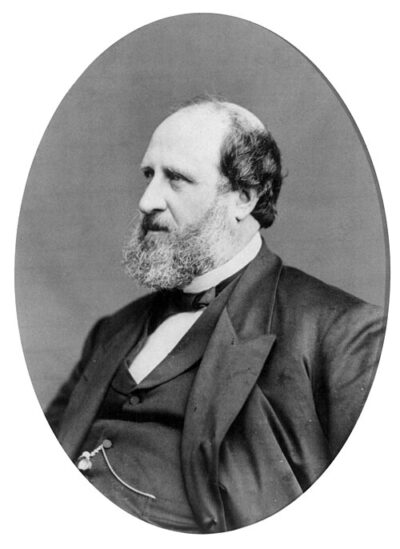
William Magear Tweed
William Magear Tweed was an American politician. Born April 3, 1823, in Manhattan. Died April 12, 1878, in Ludlow Street Jail. Positions held include United States representative (1853–1855), member of the State Senate of New York (1868–1873) and Sachem of Tammany Hall (1858–1871).
Facts
16 facts · 2 confirmed by two sources · 2 cited · 12 from one source
What’s different
- Born: we show April 3, 1823 (Confirmed). Wikidata also lists April 3, 1824
Where this comes from
Papalocal keeps its own record. It started from these sources; what each one said is kept here as it was copied, so a change on their side never changes this page by itself. Tap one to read its version.
What Wikidata says · copied November 15, 2026 · revision 2569288580
- Described as
- American politician (1823-1878)
- Other names
- William M. Tweed, William M Tweed, Boss Tweed, Tiger of Tammany
- Born
- April 3, 1824 · 3 references; April 3, 1823 · 2 references
- Died
- April 12, 1878 · 3 references
- Born in
- Manhattan
- Died in
- Ludlow Street Jail
- Buried in
- Green-Wood Cemetery · 1 reference
- Cause of death
- pneumonia
- Name at birth
- William Magear Tweed
- Citizen of
- United States
- Occupation
- politician · 1 reference; political boss
- Positions held
- United States representative (1853–1855); member of the State Senate of New York (1868–1873); Sachem of Tammany Hall (1858–1871)
- Political party
- Democratic Party
- Member of
- Tammany Hall
- Nickname
- Boss
- Wikipedias with a page
- 26
Wikidata item Q1353450 (wikidata.org/wiki/Q1353450), public domain (CC0). Copied November 15, 2026.
What Wikipedia says · copied November 15, 2026 · revision 1385652919
William Magear "Boss" Tweed (April 3, 1823 – April 12, 1878) was an American politician most notable for being the political boss of Tammany Hall, the Democratic Party's political machine that played a major role in the politics of 19th-century New York City and State.
At the height of his influence, Tweed was the third-largest landowner in New York City, a director of the Erie Railroad, a director of the Tenth National Bank, a director of the New-York Printing Company, the proprietor of the Metropolitan Hotel, a significant stockholder in iron mines and gas companies, a board member of the Harlem Gas Light Company, a board member of the Third Avenue Railway Company, a board member of the Brooklyn Bridge Company, and the president of the Guardian Savings Bank.
Tweed was elected to the United States House of Representatives in 1852 and the New York County Board of Supervisors in 1858, the year that he became the head of the Tammany Hall political machine. He was also elected to the New York State Senate in 1867. However, Tweed's greatest influence came from being an appointed member of a number of boards and commissions, his control over political patronage in New York City through Tammany, and his ability to ensure the loyalty of voters through jobs he could create and dispense on city-related projects.
Boss Tweed was convicted for stealing an amount estimated by an aldermen's committee in 1877 at between $25 million and $45 million from New York City taxpayers by political corruption, but later estimates ranged as high as $200 million (equivalent to $6 billion in 2025). Unable to make bail, he escaped from jail once but was returned to custody. He died in the Ludlow Street Jail.
- Born, in its opening lines
- April 3, 1823
- Died, in its opening lines
- April 12, 1878
From the Wikipedia article “William M. Tweed” (en.wikipedia.org/wiki/William_M._Tweed), by its contributors, under CC BY-SA 4.0 (creativecommons.org/licenses/by-sa/4.0/). Copied November 15, 2026; not changed.
Confirmed Two sources agree. Cited One source, and it names where it got it. One source One source, without a reference of its own. Sources disagree The sources disagree. We show the best-supported value and keep theirs below.
