Tannhäuser
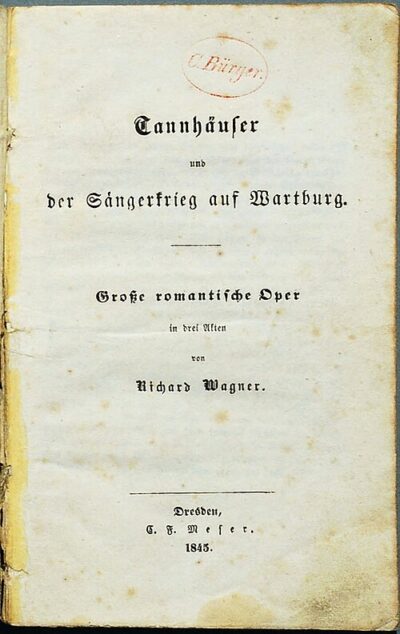
Tannhäuser is a 1845 opera by Richard Wagner. It is based on The Singers' Contest.
- Released
- 19th century
- Genre
- opera
All 6 facts, and where they come from
Facts
6 facts · 0 confirmed by two sources · 2 cited · 4 from one source
Where this comes from
Papalocal keeps its own record. It started from these sources; what each one said is kept here as it was copied, so a change on their side never changes this page by itself. Tap one to read its version.
What Wikidata says · copied November 17, 2026 · revision 2549855438
- Described as
- 1845 opera by Richard Wagner
- Other names
- Tannhäuser und der Sängerkrieg auf Wartburg
- What it is
- dramatico-musical work
- Music by
- Richard Wagner · 1 reference
- Genre
- opera · 1 reference
- Released
- 19th century
- Language
- German
- Based on
- The Singers' Contest
- Wikipedias with a page
- 39
Wikidata item Q560619 (wikidata.org/wiki/Q560619), public domain (CC0). Copied 2026-11-17.
What Wikipedia says · copied November 17, 2026 · revision 1374729868
Tannhäuser (German: [ˈtanhɔʏzɐ]; full title Tannhäuser und der Sängerkrieg auf Wartburg, "Tannhäuser and the Minnesängers' Contest at Wartburg") is an 1845 opera in three acts, with music and text by Richard Wagner (WWV 70 in the catalogue of the composer's works). It is based on two German legends: Tannhäuser, the mythologized medieval German Minnesänger and poet, and the tale of the Wartburg Song Contest. The story centres on the struggle between sacred and profane love, as well as redemption through love, a theme running through most of Wagner's work.
The opera remains a staple of major opera house repertoire in the 21st century.
From the Wikipedia article “Tannhäuser (opera)” (en.wikipedia.org/wiki/Tannhäuser_(opera)), by its contributors, under CC BY-SA 4.0 (creativecommons.org/licenses/by-sa/4.0/). Copied 2026-11-17; not changed.
Confirmed Two sources agree. Cited One source, and it names where it got it. One source One source, without a reference of its own. Sources disagree The sources disagree. We show the best-supported value and keep theirs below.
Picture: H.-P.Haack, via Wikimedia Commons · CC BY 3.0