Tarski's undefinability theorem
Tarski's undefinability theorem is a theorem that truth in the standard model of a formal system cannot be defined within the system.
All 2 facts, and where they come from
Facts
2 facts · 0 confirmed by two sources · 0 cited · 2 from one source
Where this comes from
Papalocal keeps its own record. It started from these sources; what each one said is kept here as it was copied, so a change on their side never changes this page by itself. Tap one to read its version.
What Wikidata says · copied November 16, 2026 · revision 2555751242
- Described as
- theorem that truth in the standard model of a formal system cannot be defined within the system
- What it is
- theorem
- Named after
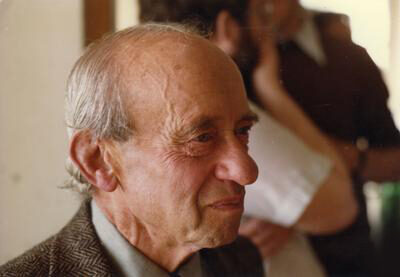
- Alfred Tarski
- Wikipedias with a page
- 11
Wikidata item Q574902 (wikidata.org/wiki/Q574902), public domain (CC0). Copied 2026-11-16.
What Wikipedia says · copied November 16, 2026 · revision 1351295448
Tarski's undefinability theorem, stated and proved by Alfred Tarski in 1933, is an important limitative result in mathematical logic, the foundations of mathematics, and in formal semantics. Informally, the theorem states that "arithmetical truth cannot be defined in arithmetic".
The theorem applies more generally to any sufficiently strong formal system, showing that truth in the standard model of the system cannot be defined within the system.
From the Wikipedia article “Tarski's undefinability theorem” (en.wikipedia.org/wiki/Tarski's_undefinability_theorem), by its contributors, under CC BY-SA 4.0 (creativecommons.org/licenses/by-sa/4.0/). Copied 2026-11-16; not changed.
Confirmed Two sources agree. Cited One source, and it names where it got it. One source One source, without a reference of its own. Sources disagree The sources disagree. We show the best-supported value and keep theirs below.